
The transition from a traditional office to a home environment often appears as a liberation at first. You trade the stiff suit for soft sweatpants and the long commute for a ten-second walk to the kitchen. However, this lack of structure frequently results in a slow erosion of your professional output and mental clarity.
Without the physical cues of a corporate building, your brain struggles to switch into a high-performance state. Many people fall into the trap of working around the clock without actually finishing their most heavy tasks.
So lets bypass the usual advice about getting dressed or drinking water to look at the psychological mechanics of remote work. You need a system that mimics the friction of an office while keeping the comforts of your own space. Let us explore how to build a fortress of focus amidst the domestic chaos.
1. The Construction of a Friction Zone
Your physical workspace acts as a psychological trigger for deep concentration. A desk in the corner of your bedroom often invites thoughts of sleep rather than data analysis. You must create a clear boundary that signals the start of the professional day to your nervous system. This setup functions as a hard barrier between your personal life and your corporate responsibilities. Without this physical separation, the lines between rest and labor become dangerously blurred.
Lighting plays a massive role in how your brain perceives the passage of time and the need for alertness. Blue-toned lights keep you sharp during the morning hours when your cognitive load is at its peak. Warm lights should remain in the living areas to signal the end of the shift. You should position your monitor at a height that prevents neck strain during long sessions. A dedicated chair provides the ergonomic support that a kitchen stool simply lacks.
Soundscapes within your home environment determine the speed of your mental processing. Some people thrive in total silence while others need a steady stream of white noise. You have to experiment with different frequencies to find what settles your internal static. Heavy curtains or acoustic panels help dampen the sounds of the neighborhood outside your window. This control over your immediate surroundings is the greatest advantage of a remote setup.
- Install a smart light bulb that shifts color temperature throughout the day. High-intensity cool light during the morning mimics the sun and keeps your alertness levels high.
- Place a physical "on-air" sign outside your office door. This visual cue tells your family that you are unavailable for casual chats or household chores.
- Set up a secondary monitor strictly for communication apps like Slack. You keep your primary screen clear for deep work while managing incoming messages in a peripheral zone.
2. The Chronotype Advantage and Time Blocks
The traditional nine-to-five schedule is a relic of the industrial age that rarely fits a modern remote worker. You have the freedom to align your heaviest tasks with your natural spikes in energy. Most people experience a cognitive peak in the late morning before a mid-afternoon slump hits. You should protect these high-energy windows with a fierce sense of priority. Meetings should happen when your brain is already starting to lose its sharpest edge.
Block scheduling prevents the constant switching of tasks that drains your mental battery. You assign a specific chunk of time to one single project and ignore everything else. This method stops the "ping-pong" effect of answering emails while trying to write a report. A timer on your desk provides a visual countdown that creates a healthy sense of urgency. You work with the clock rather than against it to reach a state of flow.
Rest periods must be as structured as your work blocks to be truly useful. You cannot scroll through social media and call it a break for your tired mind. True recovery involves a total disconnect from all digital screens for at least fifteen minutes. Move your body to a different room or step outside to change your visual perspective. These intervals prevent the burnout that comes from staring at a glowing rectangle for eight hours straight.
- Map your energy levels for a week to find your peak hours. You move your most complex analytical work to the times when you feel the most alert.
- Use a mechanical kitchen timer to set sixty-minute deep work sessions. The physical ticking sound acts as a rhythmic anchor for your concentration during the task.
- Schedule "shallow work" batches for the late afternoon hours. Admin tasks and email replies require less brainpower and fit perfectly into the end of your day.
3. The Pomodoro Rhythm and Sprint Cycles

The Pomodoro Technique
Frequent short bursts of intense activity keep the mind from wandering toward the refrigerator or television. You commit to a twenty-five-minute sprint where the world outside your current file ceases to exist. This technique exploits the natural capacity of the brain to hold focus for limited durations. You find that the pressure of a ticking clock actually helps eliminate procrastination. Small victories accumulate as you complete multiple cycles before the lunch hour arrives.
The forced break at the end of each sprint serves as a reset for your neural pathways. You stand up, stretch your limbs, and look away from the blue light of the screen. This brief pause prevents the accumulation of mental fatigue that usually sets in by noon. You return to the desk with a renewed sense of purpose and a fresh set of eyes. These micro-rests are the secret to maintaining a high output for the entire duration of your shift.
Longer breaks after every four cycles provide the deep recovery necessary for sustained effort. You use this time to step away from the work environment entirely to refresh your perspective. Mental clarity remains high because you never allow the battery to reach zero percent. You treat your brain like a high-performance engine that requires cooling periods to avoid a total meltdown. This rhythm turns a daunting workday into a series of manageable, high-speed intervals.
- Utilize a dedicated desktop application to track your sprint intervals. Automated timers remove the need for you to constantly check the clock during your work.
- Commit to a zero-distraction policy during the twenty-five-minute window. You ignore all phone alerts and browser notifications until the timer signals a break.
- Perform a physical activity during the five-minute recovery period. A quick set of push-ups or a walk to the mailbox reoxygenates your blood and clears the mind.
4. The Priority Matrix and Task Sorting
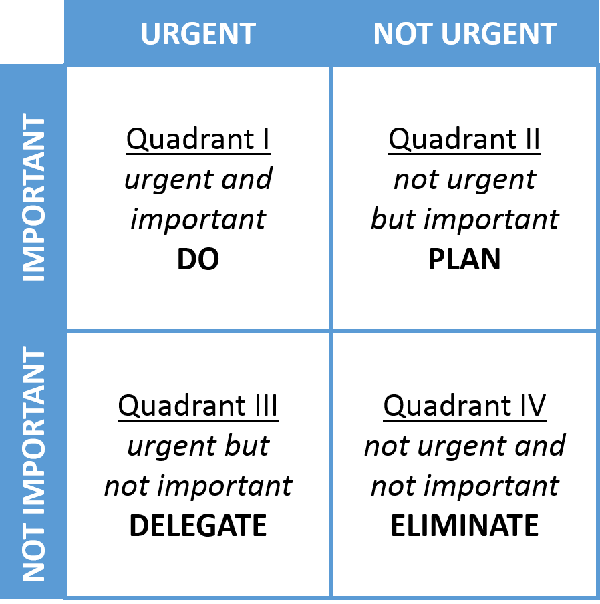
Deciding what to do first often consumes more energy than the actual labor itself. You need a logical framework to categorize your to-do list based on urgency and long-term impact. This system prevents you from wasting your best morning hours on trivial administrative tasks. You separate the loud demands of others from the quiet requirements of your own professional advancement. This mental filter ensures that your energy goes where it generates the most value.
Quadrant one contains the tasks that are both urgent and have a high impact on your career. These items represent the "fires" that you must extinguish before you do anything else. You tackle these with the full force of your concentration during your peak energy window. High-stress projects sit here, demanding your immediate and undivided attention for a successful outcome. Completion of these tasks provides a massive boost to your confidence for the rest of the day.
Strategic growth and planning fall into the second quadrant, which most people sadly neglect. These tasks are not urgent but they determine your trajectory over the next several years. You must carve out dedicated time for these items to avoid staying stagnant in your current role. Successful remote workers prioritize this quadrant to ensure they remain ahead of the curve. You treat these blocks with the same respect as a meeting with a high-level executive.
- Audit your current to-do list using a four-square grid system. You visually separate the busywork from the high-value projects that actually move your career forward.
- Delegate or automate any task that falls into the low-impact quadrant. You protect your limited mental resources by refusing to handle things that others can do.
- Schedule quadrant two activities for your Tuesday and Wednesday mornings. These midweek blocks are typically the most productive times for deep, forward-thinking work.
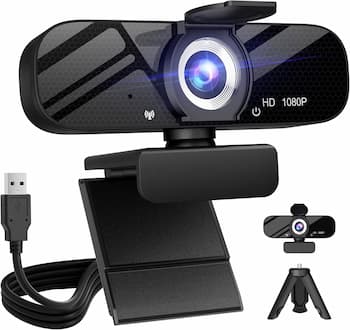
Full HD Webcam with Built-in Microphone and Rotatable Tripod
Full HD Video and Wide Angle Lens - The Tewiky High Definition 1080p Webcam features a wide angle lens and delivers crisp clear images and fluid video at 30 frames per second while gaming, video calling, online teaching, live streaming, or recording.
We earn a commission if you click this link and make a purchase at no additional cost to you.
5. Digital Hygiene and the Notification Guard
Your computer is both a gateway to your work and a bottomless pit of distractions. A single notification from a news site or a friend can shatter your focus for twenty minutes. You must treat your digital environment with the same rigor as your physical desk. This means ruthlessly silencing any app that does not contribute to your current project. Your phone should stay in another room or face down during your peak hours.
Browser tabs are the enemies of a tidy mind and a fast workflow. You find yourself clicking between twenty open pages without finishing the task on any of them. Close every tab that is not relevant to the specific problem you are solving right now. A clean digital workspace reduces the cognitive load on your brain as you switch between ideas. Use a dedicated browser for work and a separate one for your personal interests.
Artificial intelligence tools can handle the repetitive parts of your day with high speed. You let software manage your calendar or summarize long documents that you do not have time to read. This delegation frees up your mental resources for the creative or strategic work that only you can do. Technology should serve as your assistant rather than your master during the workday. You remain the pilot while the software handles the background operations.
- Disable all non-human notifications on your desktop and phone. You only see messages from actual people rather than automated alerts from social media platforms.
- Create a separate user profile on your computer for professional use. This profile contains only work-related apps and bookmarks to prevent any accidental distraction during the day.
- Utilize a website blocker during your most focused morning blocks. You prevent yourself from reflexively checking the news when a task gets difficult.

Digital Hygiene
6. The Sensory Anchor and Routine Rituals
Rituals provide the mental scaffolding that replaces the physical commute to an office. You need a series of actions that tell your brain the workday has officially begun. This might be the specific way you grind your coffee or the music you play. These anchors create a sense of predictability in an otherwise fluid home environment. Without these triggers, you might find yourself wandering around the house in a daze.
Smell is a highly underrated sense when it comes to productivity and mood regulation. A specific candle or essential oil used only during work hours creates a strong association with focus. Your brain begins to recognize the scent as a signal to settle down and get to business. This sensory cue works much faster than a mental command to "stay focused." Keep these scents away from your bedroom to maintain the separation of spaces.
Clothing serves as a psychological uniform that changes how you carry yourself at your desk. You do not need a suit, but moving out of pajamas is a requirement for serious output. Hard pants or a button-down shirt provide a slight physical friction that keeps you in a professional mindset. You feel the difference in your posture and your confidence during a video call. This small change influences your internal dialogue and your level of authority.
- Start your morning with a ten-minute walk around the block. This "fake commute" provides the transition time your brain needs to shift from home to work mode.
- Wear a pair of shoes while you sit at your desk. Having footwear on makes it less likely that you will lounge on the sofa or take an unplanned nap.
- Play a specific instrumental playlist only when you are writing or coding. The music becomes a background signal that helps your mind enter a state of deep concentration.
7. Communication Protocols and Virtual Presence

Remote work requires an over-communication strategy to prevent misunderstandings and delays. You cannot rely on a quick chat by the water cooler to clear up a project detail. Every message you send should be clear, concise, and actionable for the receiver. This precision reduces the number of follow-up questions that clutter your inbox throughout the day. You become a reliable node in the company network through your written clarity.
Video calls demand a different kind of energy than an in-person meeting in a conference room. You have to work harder to project your presence through a small lens and a microphone. Ensure your background is professional and your face is well-lit from the front. Look directly at the camera rather than the screen to simulate eye contact with your colleagues. This effort builds trust and maintains your professional reputation within the organization.
Boundaries regarding your availability must be firm and clearly stated to your team. You do not have to be online just because you are at home and the computer is nearby. Set your status to "away" during your lunch break and after your shift ends. This prevents the expectation that you are a 24-hour resource for the company. Respect the time of others by keeping your meetings short and focused on a strict agenda.
- Use bullet points in every email to make your requests easy to scan. People respond faster when they can see the core of your message without reading a wall of text.
- Record short video clips for complex explanations instead of long emails. Tools like Loom allow you to show your screen and explain your thoughts with much less effort.
- Update your status on Slack to reflect your current focus or availability. This transparency tells your team exactly when to expect a reply and when you are in a deep work phase.
8. The Domestic Contract and Boundary Setting
Living with other people while working from home creates a unique set of social frictions. You have to negotiate a contract with your partner or roommates regarding your work hours. They must understand that your presence in the house does not mean you are available for favors. These conversations prevent resentment from building up over small interruptions like laundry or dishes. Clear rules are the foundation of a peaceful and productive home office.
Childcare and work are two separate full-time jobs that cannot happen at the same time. You need a system that allows for focused blocks while someone else watches the kids. If you are alone, you must align your most intense work with their nap times or school hours. Trying to do both at once results in mediocre output and high stress levels for everyone involved. Be honest about your capacity and set realistic expectations with your manager.
Meal prep is a secret weapon for maintaining your momentum through the afternoon hours. You should not spend forty-five minutes deciding what to eat and cooking a meal from scratch. Prepare your lunches in advance just as you would for an office setting. This allows you to eat a healthy meal and still have time for a brief walk or a rest. High-protein foods prevent the brain fog that follows a heavy, carb-loaded lunch.
- Hold a weekly meeting with your household to discuss your upcoming schedule. You identify the times when you have important calls and need absolute silence in the house.
- Keep a stash of healthy snacks and a large water bottle at your desk. You avoid the need to constantly walk to the kitchen and risk getting distracted by household tasks.
- Establish a "no-work" zone in the house like the kitchen table or the sofa. Physical areas that remain work-free allow your mind to fully relax when you step away from the desk.

1000+ ChatGPT Prompts for Affiliate Marketing
9. Hardware Optimization and Technical Redundancy
A slow computer is a direct drain on your patience and your hourly output. You should invest in the best hardware your budget allows for your specific role. This includes a fast processor, plenty of memory, and a reliable high-speed internet connection. Technical glitches should be rare events rather than a daily struggle you have to manage. Your equipment must be a seamless extension of your thoughts and actions.
Redundancy is a requirement when your home becomes your primary place of business. You need a backup plan for when the power goes out or the internet fails. This might be a cellular hotspot or a battery backup for your router and laptop. These preparations prevent a minor local issue from becoming a major professional disaster. You maintain your reputation for reliability by being ready for any technical hiccup.
Ergonomics are a long-term investment in your ability to keep working at a high level. A poor setup leads to chronic pain that distracts you from your tasks and lowers your mood. Consider a standing desk or a specialized mouse that fits the natural curve of your hand. Small adjustments to your posture result in huge gains in your comfort over an eight-hour shift. Take the time to dial in your setup until it feels perfectly invisible during your work.
- Set up a secondary internet source like a mobile hotspot on your phone. You can switch over instantly if your primary provider has an outage during a meeting.
- Use a wired ethernet connection for your computer instead of relying on Wi-Fi. A physical cable provides a more stable and faster signal for video calls and large file transfers.
- Invest in a high-quality microphone and webcam for professional meetings. Clear audio and video make you stand out as a polished professional compared to those using built-in laptop hardware.
10. Mental Health Maintenance and the Social Gap

Isolation is a silent killer of motivation for many people working from home. You miss the casual interactions that happen naturally in a physical office setting. This lack of social stimulation can lead to a sense of loneliness and a drop in creativity. You must proactively seek out connections with your peers through virtual or in-person meetups. A quick phone call can often replace the energy you get from a face-to-face chat.
Self-compassion is a necessary part of the remote work experience during a hard day. Some days the brain just refuses to cooperate with the schedule you created. You should learn to recognize when you are pushing against a wall and need to pivot. Instead of staring at the screen in frustration, do a simple task or step away for an hour. Fighting your own biology is a losing battle that only leads to more exhaustion.
Professional development often gets forgotten when you are not in a corporate environment. You have to be the one to schedule your own learning and growth opportunities. Set aside an hour each week to read industry news or learn a new skill related to your job. This keeps you feeling connected to the wider world and prevents your skills from stagnating. Growth requires a conscious effort when no one is looking over your shoulder.
- Schedule a "coffee chat" with a colleague that has no work agenda. You maintain the personal connections that make a team function well over the long term.
- Listen to industry podcasts during your lunch break or your morning walk. You stay informed about the latest trends without feeling like you are adding to your workload.
- Track your wins in a digital file every Friday before you close the computer. Reviewing your successes prevents the feeling that you are just spinning your wheels in isolation.
How To Increase Productivity When Working From Home
The mastery of a home-based career requires a blend of psychological insight and logistical precision. You are both the boss and the employee in this new landscape, which demands a high level of self-regulation. By building a physical and mental environment that supports focus, you unlock a level of output that an office cannot match. This shift is about more than just getting the work done; it is about reclaiming your time and energy.
You have the opportunity to build a life that fits your personal rhythms while still hitting every professional target. Success in this realm comes to those who are willing to experiment with their routines and defend their boundaries. Every small adjustment to your desk or your schedule adds up to a massive change in your quality of life. Keep refining your system until the friction disappears and your work feels like a natural extension of your day.
How I "Finally" Make Over $7,000 Monthly Income
"The most valuable thing I've ever done!"
