
Everyone talks about the freedom of self-employment like it is some magical ticket to a stress-free life under the sun. You hear the same tired stories about people leaving their cubicles to find happiness in a home office with a cat.
That narrative is often a curated lie designed to sell courses or gain social media followers who crave an escape. Real life as a founder or a freelancer often looks like a frantic mess of unpaid invoices and midnight emails. You trade a single manager for dozens of demanding clients who expect your undivided attention at all hours.
Sleep becomes a luxury rather than a nightly routine when your income depends entirely on your output. That constant pressure to perform eats away at your peace of mind while the bills pile up. It is time to look at the grime behind the gold-plated promise of total independence.

The Illusion of Total Freedom
The promise of setting your own schedule usually ends up being a trap that keeps you chained to your desk longer than any corporate job ever would. You think that you will wake up at noon and work for a few hours before heading to the gym or the grocery store. Reality dictates that you will actually start working the moment your eyes open and continue until your head hits the pillow again. Your clients do not care about your personal time or your desire for a slow morning in the garden. Freedom in the world of business is often just a fancy word for the ability to choose which sixteen hours of the day you work.
Work-life separation disappears the second you decide to run the show from your living room or a small rented office space. You will find that the boundary between your kitchen table and your workstation becomes blurred to the point of total non-existence. Your family members or housemates will assume that because you are home, you are available to chat or run errands. Every interruption feels like a setback that you must make up for by staying up late into the night. It becomes impossible to switch off your brain because the office is always right there in your peripheral vision.
You will eventually realize that having no boss means that every single person you work for is now your superior. Each client has their own set of expectations and deadlines that rarely align with your supposed dream of a flexible lifestyle. If you tell a major account that you are taking a Wednesday afternoon off, they will likely find someone else who is more available. You are constantly at the beck and call of people who pay the bills that keep your electricity running. True independence is a myth when your survival depends on pleasing a revolving door of strangers with high demands.
Check your email notifications only twice a day to prevent the constant influx of demands from ruining your focus.
Set a hard stop time for your workday to ensure that you actually spend some time away from your screen.
Create a dedicated workspace that is physically separate from your relaxation areas to help your brain switch modes.
The Financial Rollercoaster
Steady paychecks are a relic of the past once you step into the territory of being your own master. You will experience months where money flows in like a river, followed by weeks where the mailbox is entirely empty of checks. Budgeting for a mortgage or a car payment becomes a high-stakes game of chance when you have no idea what your bank balance will look like. It is nearly impossible to plan for the future when your income is as unpredictable as the weather in a coastal town. You must develop a thick skin to deal with the anxiety of a dwindling savings account during the dry spells.
Taxes will become a source of intense dread rather than a simple deduction on a payslip at the end of every month. You are now responsible for calculating and paying both the employer and employee portions of social security and other government levies. That sudden realization that you owe thousands of dollars to the state will hit you like a ton of heavy bricks. You will spend hours staring at spreadsheets and receipts instead of doing the work that actually generates revenue for your venture. Accountants become your new best friends, but their fees only add to the mounting pile of expenses you must cover.
Unexpected costs will pop up at the most inconvenient times to drain your carefully managed profit margins and stress your nerves. Your laptop will decide to quit working right before a major deadline, or your software subscriptions will all renew in the same expensive week. You have no IT department or corporate budget to fall back on when these technical disasters strike your operations. Every penny that leaves the business account is a penny that does not go into your own personal pocket for groceries or rent. You are the one who shoulders every single financial risk while the rewards often feel small and fleeting.
Keep a separate savings account with at least six months of basic living expenses to cushion the blow of slow months.
Automate your tax savings by moving a percentage of every payment you receive into a dedicated holding fund immediately.
Track every single small expense in a digital ledger to ensure that you are maximizing your tax deductions at year-end.

The Ghost of the Weekend
Saturday and Sunday lose their meaning when you are responsible for every single outcome of your professional life. You will find yourself checking your messages during Sunday lunch or drafting a proposal while your friends are out having fun at the pub. The guilt of not working often outweighs the pleasure of resting because you know that no one else is moving the needle forward. Your mind remains tethered to the infinite list of tasks that never seems to shrink regardless of how many hours you put in. Leisure time feels like a stolen commodity that you are constantly trying to justify to your internal taskmaster.
Vacations are no longer a time to relax and recharge your batteries away from the daily grind of the office. You will likely bring your laptop to the hotel room and spend your mornings answering urgent requests from people who do not care about your tan. Taking a week off means that your income stops entirely for seven days while your overhead costs remain exactly the same. The stress of knowing that work is piling up in your absence makes it very difficult to actually enjoy the scenery or the local food. Most small business owners end up taking "working holidays" where they are simply answering emails in a different zip code.
Holidays like Christmas or New Year become just another series of days where you worry about the lack of progress on your projects. You will feel a nagging sense of panic when you see other people celebrating because you feel like you are falling behind your competitors. Your social circle may start to dwindle as you decline invitations to events because you are too exhausted or too busy to attend. Friends who work regular jobs will struggle to sympathize with your situation because they have the luxury of leaving their work at the door. You are essentially on a lonely island where the only company you have is your growing list of responsibilities.
Turn off your phone and leave it in another room during social gatherings to prevent the urge to check work updates.
Schedule your rest days in your calendar with the same level of commitment that you give to a high-priority client meeting.
Communicate your unavailability clearly to your clients well in advance of any planned time off to manage their expectations.
The Isolation Factor
Working for yourself often means spending large amounts of time in your own head without any external feedback or camaraderie. You will miss the small talk by the coffee machine or the casual brainstorming sessions that happen naturally in a shared office environment. Silence becomes your constant companion, which is fine for a while but eventually leads to a strange sense of detachment from society. You might go for days without having a real conversation with another human being about anything other than project specifications or payment terms. That lack of social interaction can take a heavy toll on your mood and your ability to relate to others.
Decision fatigue will set in quickly when you have no colleagues to consult or managers to provide a second opinion on your ideas. You are the sole arbiter of every choice, from the font on your website to the long-term strategy for your entire career. That weight of responsibility can feel paralyzing when you are tired or feeling particularly insecure about your professional path. You will second-guess yourself a thousand times a day because there is no one there to tell you that you are doing a good job. It is a mental marathon where you are the only runner and the only judge at the finish line.
Professional development becomes your own burden to bear without the support of a human resources department or a training budget. You must find the time and the money to stay current with the latest trends and technologies in your field while still working full-time. There is no one to mentor you or guide you through the murky waters of industry changes or economic shifts. You are essentially teaching yourself how to swim while you are already in the middle of a very deep and very cold ocean. This constant need to evolve without help creates a level of pressure that most employees never have to face.
Join a local coworking space or a professional group to meet other people who are in a similar situation as you.
Schedule regular lunch dates with former colleagues or friends to maintain a sense of connection to the outside world.
Find a mentor or a business coach who can provide an objective perspective on your progress and your future plans.
The Client Domination
The myth that you have no boss is shattered the moment you realize that every customer has a different set of rules for you. You will find that some people are easy to work with, while others will treat you like a personal servant who should be available at midnight. Dealing with difficult personalities becomes a major part of your day, and you cannot simply report them to a manager or a supervisor. You have to swallow your pride and remain professional even when someone is being completely unreasonable or demanding. Your reputation is your most valuable asset, so you must protect it at all costs, even if it means losing sleep.
Scope creep is a silent killer that will eat your profits and your time if you are not extremely careful with your contracts. You will start a project with a clear set of deliverables, only for the client to ask for "just one small thing" every single day. Before you know it, you are doing double the work for the same amount of money you agreed upon months ago. Saying no is difficult when you are afraid of losing a contract or receiving a negative review on a public platform. You end up working for pennies because you failed to set firm boundaries at the beginning of the relationship.
Chasing payments is a degrading and frustrating task that will consume a significant portion of your weekly schedule. You will send polite reminders, then firm notices, and eventually legal threats to people who simply refuse to pay for the work you did. That feeling of being ignored by someone who owes you thousands of dollars is enough to make anyone want to quit and find a regular job. You are essentially acting as your own collections agency, which is a role that no one ever puts on their "dream boss" list. It is a harsh reality that some people will take advantage of your small size and your lack of a legal department.
Draft a detailed contract for every project that clearly outlines the scope of work and the penalties for late payments.
Request a deposit of at least thirty percent before you begin any work to ensure that the client is serious and committed.
Use an automated invoicing system that sends out reminders so you do not have to have those awkward conversations yourself.
The Unseen Admin Load
Most people who want to be their own boss think they will spend all their time doing the creative work they love. You will soon discover that about half of your day is actually spent on boring administrative tasks that have nothing to do with your skills. You will be filing papers, updating software, organizing your calendar, and replying to endless streams of junk mail. These chores are not billable, meaning you are essentially working for free during the most productive hours of your morning. If you do not stay on top of this paperwork, your business will slowly grind to a painful and messy halt.
Marketing yourself is a full-time job that requires a completely different set of abilities than the ones you use for your actual work. You must become a social media expert, a copywriter, a salesperson, and a public relations specialist all at the same time. You will spend hours creating content or networking in the hope that someone will notice you and offer you a project. That constant need to be "on" and to promote your brand is exhausting for anyone who is naturally introverted or shy. It feels like you are shouting into a void where everyone else is also shouting about their own services and products.
Organizing your own logistics and supplies is another hidden time-sink that people rarely consider when they talk about the laptop lifestyle. You are the person who has to fix the printer when it jams and go to the store when the pens run out. You have to research insurance policies, pension plans, and healthcare options that were previously handled by your employer. These decisions are weighty and have long-term consequences for your personal and professional security. Every hour spent researching a new phone plan is an hour you are not earning money to pay for that same plan.
Dedicate one day a week to handling all of your administrative tasks so they do not bleed into your creative time.
Outsource small tasks like data entry or basic research to a virtual assistant if your budget allows for it.
Create a checklist of your monthly overhead costs to ensure that you are always aware of your break-even point.
The Burnout Trap

The fire that drives you to start your own business is the same fire that will eventually burn you to a crisp if you are not careful. You will feel a constant urge to do more, to grow faster, and to work harder than everyone else around you. This internal pressure is far more relentless than any boss you have ever had in a corporate office. You will ignore the signs of exhaustion, like headaches and irritability, because you think that you just need to push through one more week. Eventually, your body will make the decision for you, and you will find yourself unable to focus or even care about your work.
Mental fatigue is a quiet predator that will steal your creativity and your enthusiasm before you even realize it is happening. You will find that tasks that used to take an hour now take four, and your ideas start to feel stale and uninspired. That feeling of being "stuck" is terrifying when your livelihood depends on your ability to produce high-quality output on demand. You cannot just take a sick day when your brain is tired, because the work will still be there waiting for you tomorrow. Burnout in the self-employed world often leads to a total collapse of the business because the founder is the only engine in the car.
Physical health often takes a backseat to the demands of the business when you are the only one in charge. You will sit in the same chair for twelve hours a day, eating quick and unhealthy snacks because you do not have time to cook. Exercise becomes a memory of your past life as an employee with a predictable schedule and a gym membership. Your eyes will strain from looking at screens in low light, and your back will ache from a lack of movement. This neglect of your physical self will eventually catch up with you and impact your ability to function at a high level.
Take a twenty-minute walk outside every single day to clear your head and get some much-needed physical activity.
Practice a hobby that has absolutely nothing to do with your work to give your brain a chance to fully reset.
Listen to your body when it tells you to stop, even if it means delaying a deadline by a few hours or a day.
Mental Stamina in Business
When you're steering the ship of your own venture, your mind has to be in tip-top shape. Mental stamina isn't just about pulling all-nighters or grinding out work—it's the endurance to handle the ups and downs of business. It's about being a marathon runner in a world full of sprints, right?
- Stress Management: Keeping cool under pressure is a daily requirement. When a problem pops up, you can’t just pass it off to someone else. It’s on you to solve it.
- Decision Fatigue: Making choices can wear you down. Ever noticed how after a day of back-to-back decisions, even choosing what to eat for dinner feels like a chore?
- Isolation: Going solo in business can be lonely. Without colleagues to bounce ideas off of, it’s all on your internal monologue to keep things moving.
Building a Resilience Toolbox
Since your business's success is so tied to your mental resilience, having a toolkit to manage stress and maintain your sanity is a game-changer, don't you think?
- Routine Matters: A solid daily routine can act as an anchor, giving your day structure and predictability amidst the chaos.
- Mindfulness Practice: Ever tried meditation or deep breathing? These can be powerful for staying centered and calm.
- Exercise: It’s not just good for your body but also for your brain. It clears the fog and keeps you sharp.
Rolling with the Punches
Business is unpredictable, and things often don't go as planned. The mental game is about bouncing back, isn't it?
- Adaptability: Being rigid can break you. Learning to adapt your strategy on the fly is crucial.
- Learning from Failure: Instead of crumbling after a setback, it’s about taking notes and growing from the experience.
- Positivity: Maintaining a positive outlook can turn a wall into a hurdle.
The Inner Circle Influence
They say you’re the average of the five people you spend the most time with. This is super true when it comes to business.
- Support Network: Having friends or mentors to talk to can provide a fresh perspective or just a chance to vent.
- Community Engagement: Joining groups or forums with fellow entrepreneurs can offer solidarity and advice.
The Emotional Roller Coaster
Running your own show means personal investment, and with that comes an emotional ride—thrills, dips, and all.
- Passion vs. Stress: Balancing the drive with the pressure is an art form, wouldn’t you agree?
- Attachment: It’s your baby, so every hit feels personal. Learning to separate self-worth from business performance is tough but necessary.
Keeping an Eye on the Horizon
Long-term vision can sometimes be the only thing keeping you on track when the going gets tough, right?
- Goal Setting: Knowing what you’re aiming for keeps you focused.
- Perspective: When mired in the day-to-day, it’s crucial to step back and look at the bigger picture.
- Patience: Success rarely happens overnight. It’s about playing the long game.
The mental game in business is like the weather in a temperamental climate—it can change in an instant, and you've got to be prepared for anything. But with a good set of tools and the right mindset, you can weather any storm. Right, boss?
The Lack of Safety Nets
Employees usually enjoy a variety of benefits that provide a cushion when things go wrong in their personal or professional lives. You will quickly find that as a self-employed person, those nets are completely absent unless you pay for them out of your own pocket. Sick pay is a concept that no longer exists for you; if you do not work, you simply do not get paid. A simple flu can derail your entire month and leave you scrambling to cover your basic living expenses. You are essentially gambling on your own health every single day you sit down at your desk to work.

Retirement planning is another major responsibility that falls squarely on your shoulders once you leave the world of traditional employment. There is no company match for your pension and no one to remind you to save for your later years in life. You will likely feel the temptation to reinvest every spare dollar back into your business instead of putting it into a long-term savings account. This short-term thinking can lead to a very difficult future where you are forced to work long past the age when you should be resting. Building a nest egg requires a level of discipline that is hard to maintain when your current income is so volatile.
Legal protection is something that you will miss the moment a contract goes sour or someone threatens to sue you over a misunderstanding. You do not have a legal team to handle the paperwork or represent your interests in a dispute with a client or a vendor. Every legal fee comes directly out of your profits, which makes the prospect of a court case even more daunting. You will find yourself reading through pages of fine print and trying to understand complex regulations that have nothing to do with your core business. This lack of a safety net means that one major mistake could potentially end your entire professional career and wipe out your savings.
Purchase a comprehensive professional liability insurance policy to protect yourself from potential lawsuits and legal claims.
Set up an automatic transfer to a retirement account every month, even if the amount is very small at first.
Research the cost of private health insurance and disability coverage to ensure that you are protected in case of a serious illness.
The Self-Doubt Spiral
The psychological burden of being solely responsible for your success or failure is a weight that few people are prepared to carry. You will have days where you feel like a genius and other days where you feel like a total fraud who is about to be found out. That "imposter syndrome" is rampant among the self-employed because there is no external validation of your status or your skills. You will compare your messy behind-the-scenes reality to the polished highlights of other people on social media and feel like you are failing. This constant comparison is a thief that will steal your confidence and your ability to make bold moves in your business.
Isolation can amplify your negative thoughts and make small problems feel like insurmountable mountains of disaster. Without a team to vent to or a manager to reassure you, your brain will often spiral into the worst-case scenarios for your future. You will worry about where your next client is coming from even when you are currently fully booked with work for the next three months. That anxiety is a constant background noise that can make it very difficult to concentrate on the task at hand. Learning to manage your own psychology is just as important as learning how to manage your finances or your marketing.
Feedback is hard to come by when you are your own boss, and when it does come, it is often in the form of a lost contract or a harsh review. You do not get annual performance reviews that highlight your strengths and areas for improvement in a constructive and helpful way. Instead, you have to read between the lines of your clients' emails and try to figure out if they are actually happy with your work. This lack of clear communication can lead to a lot of unnecessary stress and wasted effort as you try to please people without knowing what they want. You are essentially flying blind and hoping that you are heading in the right direction for your career.
Write down a list of your achievements and positive client testimonials to read on days when you are feeling particularly insecure.
Limit your time on social media to avoid the trap of comparing your life to the curated images of other entrepreneurs.
Find a group of like-minded professionals who can offer honest feedback and a supportive ear when things get difficult.
The Reality of Success
Success in the world of being your own boss often looks very different from the flashy images of cars and mansions you see online. You will find that "making it" usually just means having a stable roster of clients and a bank account that stays in the black. It is a slow and often boring process of showing up every day and doing the work even when you do not feel like it. The glamorous moments are few and far between, and they are usually preceded by months of hard work and late nights. You have to be okay with the fact that most people will never see the effort that goes into your achievements.
Maintaining your success is often more difficult than achieving it in the first place because the competition is always right on your heels. You cannot afford to get comfortable or lazy because there is always someone younger, cheaper, and more hungry for work than you are. This means that you are constantly looking for ways to improve your services and stay ahead of the latest trends in your industry. The pressure to innovate and evolve is constant, and it can be exhausting to keep up that level of intensity for years on end. You are essentially on a treadmill that never stops moving, and you have to keep running just to stay in the same place.
True satisfaction comes from the knowledge that you built something with your own hands, but that feeling is often fleeting and tempered by worry. You will celebrate a big win for five minutes before your brain starts thinking about the next task or the next problem that needs solving. The "hustle culture" that surrounds entrepreneurship can make it feel like you are never doing enough, no matter how much you achieve. Learning to appreciate the small victories and find a sense of peace in the middle of the chaos is the real secret to survival. It is not about the destination, but about finding a way to enjoy the messy and unpredictable process of being in charge.
Set realistic milestones for your business and take the time to celebrate when you reach them, no matter how small they are.
Define what success looks like for you personally, rather than adopting the definitions of people you see on the internet.
Keep a journal of your progress to see how far you have come since the day you decided to start your own venture.
The Creative Block Wall
Innovation is a demanding mistress that requires you to be constantly fresh and full of new ideas for your clients and your brand. You will hit a wall eventually where your brain simply refuses to produce anything of value, regardless of how many hours you stare at the screen. This is a terrifying experience when you have deadlines looming and no one else to take over the work for you. That pressure to be creative on command is one of the most stressful aspects of being a self-employed professional in any field. You will find yourself searching for inspiration in places you never would have looked before, just to get through the day.
Routine can be both a savior and a curse when you are working in the same environment day after day without any change of scenery. You will find that your creativity starts to stagnate when you follow the exact same path from your bed to your desk every single morning. That lack of external stimuli can make your work feel repetitive and dull, which in turn leads to a decrease in the quality of your output. You have to find ways to inject variety into your life, whether it is working from a library or taking a different route on your daily walk. Keeping your mind active and engaged is a full-time job in itself when you are the only one in the office.
Expectations from your clients can often stifle your creativity by forcing you into a box of what they think is "safe" or "correct." You will find yourself compromising your artistic vision or your professional standards just to get a project approved and get paid on time. This conflict between your desire to do great work and the need to please a difficult customer is a constant source of frustration. It can make you feel like a "glorified worker" rather than the independent visionary you hoped to become when you started. Balancing these competing demands requires a level of diplomacy and patience that is hard to maintain over the long haul.
Take regular breaks away from your desk to give your subconscious mind a chance to work on problems in the background.
Expose yourself to different forms of art, music, and literature to keep your creative well from running dry during busy periods.
Experiment with new techniques or styles on personal projects where there is no pressure from a client to produce a specific result.
The Tech Support Nightmare
Technology is the backbone of almost every modern business, but it is also a source of constant frustration and potential disaster for the self-employed. You are the one who has to deal with a broken website, a crashed server, or a malware infection at three o'clock in the morning. There is no one to call for help, and every hour your systems are down is an hour of lost productivity and potential revenue. You have to become a semi-expert in a dozen different technical areas just to keep your business running on a daily basis. This learning curve is steep and often takes you away from the work you are actually being paid to do.
Software updates and compatibility issues will haunt your dreams and eat your afternoons without any warning or reason. You will find that a tool you rely on suddenly changes its interface or stops working with your operating system after a mandatory update. These technical glitches can throw your entire schedule out of whack and leave you scrambling to find a workaround or a replacement. You end up spending more time managing your digital tools than you do actually using them to create value for your clients. It is a constant battle against obsolescence and the shifting sands of the tech industry that never seems to end.
Data security is a massive responsibility that can keep you awake at night if you realize how vulnerable you actually are to cyber threats. You are responsible for protecting your clients' sensitive information as well as your own financial records and intellectual property from hackers. One data breach could potentially end your business and leave you facing massive legal and financial consequences for years to come. You have to invest time and money into robust security measures, backups, and encryption protocols that are complex and difficult to manage. This constant state of high alert is yet another layer of stress that the "be your own boss" lifestyle rarely mentions in its brochures.
Implement a robust backup strategy that includes both cloud-based storage and physical external hard drives for your most important data.
Use a password manager to create and store complex passwords for all of your professional accounts to enhance your security.
Set aside a small budget for professional technical support or repair services so you do not have to fix everything yourself.
Be Your Own Boss: What A Load Of Old...
The reality of being your own boss is a far cry from the serene and glamorous lifestyle that many people imagine. You will face a relentless stream of challenges that will test your patience, your finances, and your mental health on a daily basis. Freedom comes at a very high price, and that price is often your personal time, your social life, and your peace of mind.
While there are certainly rewards to be found in building something of your own, they are often hard-won and overshadowed by the weight of responsibility. You must be prepared to work harder than you ever have before and to face the possibility of failure with every choice you make. If you are looking for an easy escape from the corporate world, you will likely find that you have simply traded one set of problems for another, much more demanding set. Be honest with yourself about the sacrifices before you take the leap into the unknown.
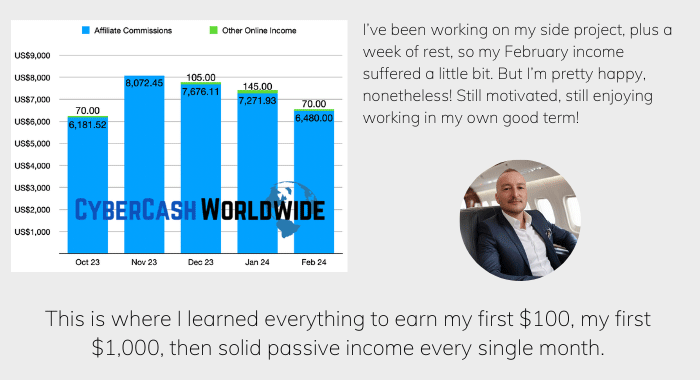
(Real Time) Affiliate Income Report Last Month

It’s good to know about being your own boss but the question is how to become one.
You have not told me yet.
I am a single father and takes so much time to make money with 2 part time jobs.
Please let me know how to become my own boss.
Thank you.
Hi Ciuput, “how to be your own boss” – please check my other posts. This one might help you “How To Make Money Online Blueprint”. Any questions regarding the article don’t hesitate to leave a comment again, I’ll help you as much as I can. Thanks for your comment!
Great information. I am running a business for the last 2 yrs. It’s all true.
Thanks for your comment Zahid!