
Running a business alone shifts your mental state into a peculiar, high-stakes gear. You lack the safety net of a corporate structure or a team to deflect incoming crises. Pressure builds up in the quiet spaces between your tasks. Anxiety often creeps in when you least expect it, usually during the hours meant for rest. Solo work demands a level of mental fortitude that few people ever need to develop. You are the CEO, the intern, and the janitor all at once. Every choice rests on your shoulders, creating a weight that feels heavy after a while.
Solopreneurs need a robust system to handle the emotional swings of the market. Your sanity remains your most valuable asset in this lonely game. Protecting your mind ensures your business survives the inevitable rough patches ahead.
Modern Strategies for Solo Mental Health
Solopreneurs often find themselves stuck in a cycle of constant output without any recovery. Digital work environments create a sense of urgency that never truly goes away. Your nervous system stays stuck in a fight or flight response because of endless notifications. Science shows that chronic stress kills creativity and ruins long-term decision making. You need a strategy that goes beyond simple breathing exercises.
A structured routine prevents the mental exhaustion that comes from making too many choices. Routine acts as a buffer against the chaos of an unpredictable workload. You should focus on creating boundaries that protect your focus from outside noise. Focus remains a finite resource that drains quickly in a solo environment. Success depends on your ability to stay calm under fire.
Professional isolation adds another layer of difficulty to your daily life. You spend most of your time inside your own head without external feedback. Your thoughts become skewed toward the negative when you stay isolated for too long. Human connection provides a reality check that keeps your perspective healthy. You must find ways to interact with the world outside your home office.
Establish a hard stop time for all professional communication. A clear boundary helps your brain transition from work mode to rest mode.
Use a separate device for non-work activities to reduce mental associations. Physical separation of tasks keeps your mind from wandering back to business worries.
Schedule high-intensity focus blocks early in the day. Your brain handles complex problems better before the fatigue of the afternoon sets in.
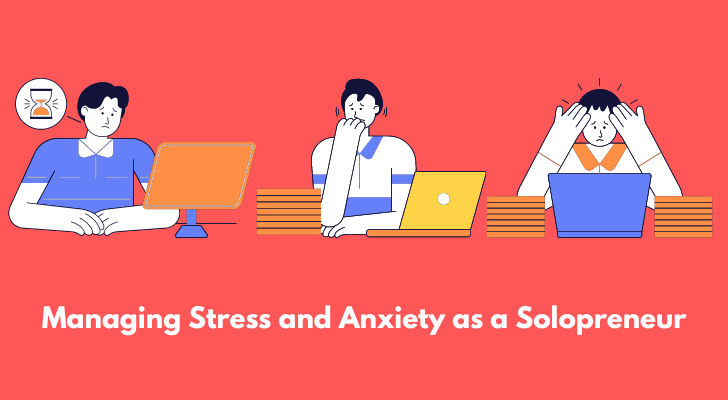
The Impacts of Working Alone on Mental Health
Alright, imagine you're working alone, just you and your laptop, day in and day out. At first, it might sound pretty awesome - no annoying coworkers to deal with, no distractions, and you can work at your own pace, right? But over time, working in solitude can start taking a toll on your mental well-being.
Humans are social creatures by nature. We thrive on interaction, connection, and support from others. When we work alone for extended periods, we miss out on those natural social interactions that give us a sense of belonging and purpose. We start to feel isolated and lonely.
Think about it, when you work in a team or an office, there's usually some chit-chat, laughter, and the occasional rant session about work or life in general. These moments, while seemingly insignificant, help release stress and build bonds with colleagues. When you're by yourself, you don't have that outlet.
Also, without coworkers around, you might start overthinking things. Like, "Am I doing a good job?", "Is my work up to par?", or even "Am I on the right track with my career?". Doubts and insecurities can creep in because you don't have colleagues to give you constructive feedback or reassurance.
Oh, and let's not forget about the lack of motivation sometimes. When you're alone, it can be challenging to find that extra push to get things done. Without anyone to cheer you on or share the workload, you might start feeling a bit demotivated.
Now, I'm not saying that working alone is all doom and gloom. It can be great for some introverted folks who prefer peace and quiet. But for many, the lack of human interaction can lead to decreased happiness and increased stress.
Biological Stress Responses in Solo Work
Solo business owners often live in a state of high alert that mimics a biological survival mode. Your brain interprets a late client payment or a silent inbox as a literal threat to your existence. A steady drip of stress hormones eventually dulls your sharpest creative edges. Success requires a brain that functions without the constant fog of low-level panic. Knowledge about how your nervous system reacts to professional pressure changes everything.
Stress hormones like cortisol stay elevated when you never truly leave your desk. Your body remains ready for a crisis that exists only in your email inbox. Long-term exposure to these chemicals leads to physical exhaustion and mental burnout. You will notice a decline in your ability to solve complex problems over time. Restoration happens only when you intentionally lower your physiological arousal.
High-pressure environments demand a physical response to keep the mind sharp. You should view your body as the engine that drives your entire operation. Fatigue often disguises itself as a lack of motivation or a loss of interest. Physical movement clears out the chemical leftovers of a stressful workday. Your business health depends entirely on your physical wellbeing.
Track your resting heart rate to identify periods of hidden overwork. A rising baseline often indicates that your body needs more recovery time than you realize.
Walk outdoors without any digital devices for twenty minutes daily. Natural light and movement reset your circadian rhythm and lower cortisol levels.
Practice box breathing during moments of intense deadline pressure. Controlled respiration sends a signal to your brain that no immediate physical danger exists.
Managing Financial Scarcity Anxiety
Money worries act as a constant background noise for most people working for themselves. You feel every fluctuation in your bank account with intense emotional weight. Scarcity mindsets limit your ability to think about long-term growth or expansion. You end up taking low-paying projects just to feel a temporary sense of security. Breaking this cycle requires a shift in how you view your cash flow.
Predictable income feels like a distant dream when you start out alone. You must build a financial buffer that covers at least six months of living costs. Security comes from knowing that one lost client will not end your career. A large savings account acts as a psychological shield against daily market volatility. You will make better decisions when you do not act out of desperation.
Wealth management for solos involves more than just keeping track of invoices. You should automate your tax savings to avoid a massive shock at the end of the year. Confusion about your actual take-home pay creates unnecessary mental strain and worry. Knowledge of your exact numbers replaces fear with a sense of control. You deserve to feel confident about your financial future every single day.
Set up an automated transfer to a separate tax savings account. Professional peace of mind comes from knowing your obligations are already covered.
Review your financial statements once a week at a scheduled time. Regular check-ins prevent the buildup of anxiety that stems from ignoring your bank balance.
Calculate your minimum viable income to remove the fear of the unknown. Knowing the exact number needed to survive makes the mountain look much smaller.

Your Responsibilities Toward Your Mental Health
Being the captain of your own ship as a solopreneur - just like any ship, it needs maintenance and care to sail smoothly. You're in charge of everything - making decisions, dealing with challenges, and managing your business. It can be super rewarding, but it can also be quite demanding and overwhelming at times.
Think of your mind as the engine that keeps your ship running. If the engine isn't functioning well, the ship won't reach its destination, right? Your mental health works similarly. When you take care of it, you're ensuring your mind stays sharp, focused, and creative, which are all essential for making your business successful.
Here's why responsibilities toward your mental health should not be underestimated:
- Clear Thinking: Running a business involves lots of problem-solving and decision-making. When you prioritize your mental well-being, your mind becomes clearer, helping you make better choices and find creative solutions to challenges.
- Stress Management: Entrepreneurship can be stressful; it's like riding waves in a stormy sea. Taking care of your mental health equips you with coping mechanisms to handle stress better, so you don't feel overwhelmed by the rough waters.
- Productivity Boost: When you're mentally healthy, you'll find that your productivity soars. You'll be able to focus on tasks efficiently and get things done, making your journey as a solopreneur more enjoyable and rewarding.
- Preventing Burnout: Running a one-person show means you're juggling many roles. If you neglect your mental health, you might end up exhausted and burnt out. Taking time to recharge and relax will prevent this from happening.
- Confidence and Motivation: A healthy mind boosts your confidence and motivation. You'll believe in your abilities, stay committed to your goals, and face challenges head-on like a fearless sea explorer!
- Balancing Work and Life: Ahoy, work-life balance! As a solopreneur, it's easy to get caught up in your business 24/7. But by looking after your mental health, you'll be better at setting boundaries and making time for your personal life, which is essential for overall happiness.
- Resilience for Stormy Seas: Life throws curveballs, and business might hit rough patches. A resilient mind can weather these storms and bounce back stronger, ensuring your ship sails smoothly through the toughest waters.
It's not about being perfect or avoiding all challenges. It's about nurturing yourself and being kind to your mind, just as you would take care of your ship to reach the most incredible destinations.
Overcoming Decision Fatigue in a Vacuum
Every tiny choice in your business requires your personal approval and energy. You decide on everything from software choices to the wording of a single tweet. Your brain has a limited capacity for making high-quality choices every day. Fatigue sets in after a few hours of constant, solo micro-management. You need to reduce the number of choices you make to save energy for what matters.
Willpower disappears when you force yourself to make hundreds of small decisions. You will find yourself scrolling through social media when you should be working. Exhaustion leads to procrastination and a lack of clear direction for your projects. Systems and rules help you avoid the drain of constant deliberation. You should create a set of default choices for your recurring tasks.
Automation removes the heavy lifting from your daily administrative routine. You should use software to handle scheduling, invoicing, and basic data entry. Technology handles the repetitive work while you focus on high-level creative problem solving. Your mental clarity will improve when you stop worrying about small details. Consistency becomes easier when you do not have to think about it.
Create a weekly menu to eliminate daily choices about what to eat. Saving mental energy on food leaves more room for complex business strategy.
Use a template for common client emails to speed up your communication. Standardized responses reduce the time spent staring at a blank screen.
Select your work outfit the night before to simplify your morning. A morning without choices allows you to start your deep work immediately.
Reclaiming Identity from Professional Roles
Work often swallows your entire personality when you run a solo operation. You begin to define your worth by the number of sales you make each week. Failure in your business feels like a personal indictment of your character. This merge of self and work creates a fragile emotional state. You must find ways to separate who you are from what you do.
Hobbies provide a necessary outlet for your energy away from the computer screen. You need activities where the outcome does not matter for your bank account. Pursuits like gardening or woodworking offer a tangible sense of accomplishment. Success in a hobby builds confidence that is independent of your professional life. Your mind needs a space where it is allowed to be a beginner.
Social circles should include people who do not care about your business. You need conversations that revolve around things other than marketing or sales. Friendships provide a mirror that reflects your value outside of your career. Isolation makes the business feel much larger and more threatening than it actually is. You are a human being first and a business owner second.
Join a local club or group focused on a non-professional interest. Interacting with people in different fields keeps your perspective broad and healthy.
Keep your phone in a different room during family meals and gatherings. Presence in the moment strengthens your personal connections and reduces work-related stress.
Write down three things you like about yourself that have nothing to do with work. Acknowledging your inherent value protects your self-esteem during slow business months.
Clear-Thinking Is Positive Thinking

Clear thinking means positive thinking. You can focus on changing the way you think to stay stress-free while working alone from home. Here's what you can do.
Don't Do "What Ifs"
When problems come knocking, take a deep breath and be mindful of the present moment. Instead of getting carried away by worries about the past or future, focus on what's happening right now. It's like grounding yourself in the here and now.
Imagine you're working on a project, and suddenly a technical glitch derails your progress. Take a deep breath, acknowledge the frustration, and remind yourself to stay in the present moment. Instead of panicking, focus on finding a solution step-by-step. Mindfulness helps you remain calm and approach the issue with a clear mind.
Flip the Perspective
Say, you receive feedback from a client, and it's not as positive as you hoped. Instead of feeling discouraged, view it as an opportunity to improve. Look at the feedback as valuable input to enhance your skills and deliver even better results next time.
When a problem floats your way, try to see it from different angles. It's like examining a puzzle piece from all sides to find where it fits. Shifting perspectives can lead to creative solutions and a more positive outlook.
This hidden knowledge used by the elites will let you generate wealth and prosperity

Focus on What You Can Control
You have a tight deadline for a project, but the client is slow in providing the necessary information. Instead of stressing over their actions, concentrate on what you can control. Organize other tasks, prepare the groundwork, and reach out politely to remind the client about the information you need.
Some waves are beyond your control, but don't let them capsize your ship! Concentrate on the things you can influence and take action where you can.
Learn from Storms
You launch a new service, but it doesn't attract the expected number of customers. Instead of feeling defeated, analyze the situation. Identify potential reasons for the slow response, gather insights, and use this knowledge to tweak your marketing strategy and improve your offering.
Storms come and go, but they leave behind valuable lessons. Any challenge is a learning opportunity. See it that way.
Practice Gratitude
Count your blessings like a treasure chest of joy! Take time each day to appreciate the good things in your life.
At the end of each workday, jot down three things you're grateful for regarding your business or personal life. It could be landing a new client, receiving positive feedback, or simply enjoying a delicious lunch. Practicing gratitude cultivates a positive mindset.
Positive Self-Talk
Ahoy there, inner voice! Speak to yourself kindly and encourage yourself like a true friend. Replace negative thoughts with positive affirmations to keep your spirit afloat.
If you make a mistake or face a setback, talk to yourself like a supportive friend. Instead of getting depressed about it, say, “This is nothing. I’ve been there before.” or “Wow, this is new!” Then say, “Now I know how to get around it if a similar problem happens again.”
Positive self-talk helps you bounce back with confidence.
Take Breaks and Unwind
After a long day of work, take a break to do something enjoyable. It could be going for a walk, listening to music, or reading a chapter of a book. Taking time to unwind refreshes your mind and helps you return to work with renewed energy.
Even the most experienced sailors need a break to rest their oars. When stress builds up, step away from work and do something you enjoy. It's like refreshing your sails for a smoother journey ahead.
Learn to Let Go
You pitched a proposal, but the client chose a different provider. Instead of dwelling on it, let go of any disappointment or self-doubt. Focus on seeking new opportunities and keeping a positive outlook for future endeavors.
Sometimes, holding on to worries is like holding on to heavy anchors. Practice letting go of things you can't change and focus on what you can do right now.
Cognitive Reframing of Professional Setbacks
Mistakes feel like disasters when there is nobody else to blame. You might dwell on a lost contract for days, replaying the conversation in your head. Negativity bias forces your brain to focus on the one thing that went wrong. You ignore ninety-nine successful interactions to obsess over a single critique. Learning to reframe these events will save your mental health over the long haul.
Setbacks offer data points rather than final judgments on your ability. You should view every failed project as a lesson in what not to do next time. Curiosity replaces frustration when you analyze your errors with a clinical eye. You will find that most mistakes are easily fixable with a bit of time. Resiliency grows every time you bounce back from a perceived failure.
Perspective helps you see the true scale of a professional problem. You should ask yourself if a current issue will matter in five years. Most of the things that cause panic today will be forgotten by next month. Your business is a long game with many ups and downs. You must keep your eyes on the horizon rather than the rocks at your feet.
- Log your daily wins in a journal to counteract your negativity bias. Seeing a list of accomplishments makes the occasional failure seem much smaller.
- Distance yourself from a problem by describing it in the third person. Speaking about your business as an outside observer removes the emotional sting of a setback.
- Limit your post-mortem analysis of a mistake to exactly ten minutes. Strict time limits prevent the downward spiral of unproductive ruminating and self-blame.
Optimizing the Physical Workspace for Calm
Environment dictates your mood more than you likely realize on a daily basis. A cluttered desk leads to a cluttered and anxious mind. You need a space that signals safety and focus to your brain. Distractions in your home office pull at your attention and increase your frustration. You should curate your surroundings to support a state of calm productivity.
Lighting affects your energy levels and your ability to stay focused. Harsh overhead lights can cause headaches and increase feelings of irritability. Natural light improves your mood and regulates your internal biological clock. You should position your desk near a window if possible. Your environment should feel like a sanctuary rather than a prison.
Soundscapes can either help or hinder your ability to get things done. Some people require total silence to think, while others need white noise. You should experiment with different audio environments to find what works for you. Noise-cancelling headphones act as a physical barrier between you and the world. Control over your sensory input reduces the feeling of being overwhelmed.
- Clear your desk of everything except the task you are currently doing. Minimalism in your physical space leads to a direct increase in your mental clarity.
- Add a small plant to your office to improve air quality and mood. Greenery in a workspace has been linked to lower levels of psychological distress.
- Use a high-quality chair that supports your posture throughout the day. Physical comfort prevents the minor aches that eventually turn into major distractions.
Try Saying "No"
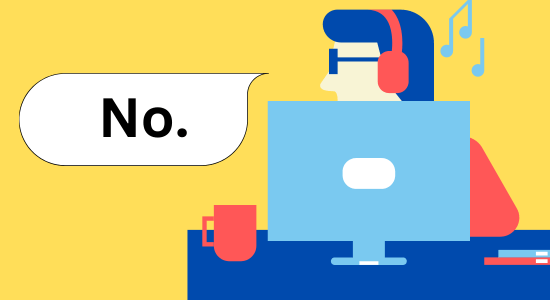
As a solopreneur, you might find yourself juggling too many tasks and saying "yes" to everything that comes your way. It's like carrying a super heavy load while trying to find your path through the business world.
Take a moment to think about times when you've agreed to projects that overwhelmed you. Maybe they didn't align with your business goals or values, and it left you feeling stressed and drained.
Now, saying "No" doesn't mean you're being rude or selfish; it means you're prioritizing yourself and your well-being. It's like setting boundaries and clearing a path for the right opportunities.
Example: If you are a graphic designer
Imagine you're a freelance graphic designer, and you have a full plate of projects on your desk. A potential client reaches out with an exciting project that sounds tempting, but you know it's beyond your capacity to deliver quality work on time. In the past, you might have said "yes" to avoid disappointing them, even though you were already overwhelmed. But now, you decide to embrace the power of "No."
You politely decline the project, explaining that you have prior commitments and want to give your current clients your full attention. By doing this, you create space to focus on your existing projects and deliver exceptional results. It's like streamlining your design journey and ensuring each project gets the attention it deserves.
Example: If you are a writer
As an aspiring author working on your first novel, you receive an invitation to speak at a conference on a topic unrelated to your book. Initially, you might have felt flattered and thought about accepting the offer, but then you remember the power of "No." You kindly decline the invitation, expressing your gratitude but explaining that you need to focus on completing your novel. By saying "No" to this distraction, you prioritize your writing goals and stay on course to achieve your dream of becoming a published author. It's like charting your literary journey and staying true to your passions.
In both examples, embracing the power of "No" helps you prioritize your time, energy, and resources. It allows you to stay focused on what truly matters to you as a solopreneur, making your journey more purposeful and fulfilling. Remember, saying "No" doesn't mean closing doors but rather opening the right ones that lead you toward success and happiness!
When you practice saying "No" when necessary, you're creating space for projects that truly matter to you. You'll have more time and energy to invest in endeavors that align with your goals and bring you joy.
Prioritizing the right projects helps you focus on what truly moves your business forward. It allows you to be intentional in your choices instead of getting pulled in different directions.
You're in charge of your journey as a solopreneur. By reflecting on your experiences, practicing saying "No," and prioritizing projects aligned with your goals and values, you'll pave the way for a smoother and more fulfilling entrepreneurial adventure. It's all about steering yourself in the right direction and creating a path to success and happiness.
The Myth of Constant Linear Growth
Culture tells you that you must always be expanding your solo business. You feel a sense of guilt when you are not actively hunting for new clients. This pressure to grow creates a permanent state of dissatisfaction. Stability is a valid choice that many solopreneurs ignore in favor of more stress. You should decide what "enough" looks like for your specific lifestyle.
Growth often brings more complexity and higher levels of anxiety. You might find that a larger business requires more management and less creative work. Scaling usually means hiring people, which adds a new set of headaches. You should evaluate if the extra money is worth the loss of your personal freedom. Success is defined by you, not by a chart on a wall.
Slowing down allows you to improve the quality of your current offerings. You should focus on doing better work rather than just doing more work. Depth creates a more sustainable business model than constant horizontal expansion. You will find more satisfaction in mastery than in simple accumulation. Your worth does not increase just because your revenue does.
Define your ideal work week including the number of hours you want to spend. Setting boundaries around your time prevents the business from consuming your life.
Identify the point of diminishing returns for your professional efforts. Knowing when extra work stops producing significant results helps you stop and rest.
Focus on one key metric for success instead of tracking everything. Simplified tracking reduces the anxiety that comes from over-analyzing every single data point.
Social Integration for the Home-Based Professional
Loneliness is a silent killer of motivation in the solo business world. You miss the casual banter and the social support of a traditional office. Silence in your workspace can eventually lead to a sense of profound disconnection. You need to be proactive about building a social life outside of your work. Human beings are social creatures who need regular interaction to stay sane.
Coworking spaces provide a sense of shared purpose without the corporate politics. You should consider working from a cafe or a library once a week. Seeing other people working hard can boost your own productivity levels. You will feel less alone when you are part of a bustling environment. Physical presence in a community keeps your social skills from atrophying.
Mentorship offers a way to connect with people who have walked your path. You should seek out peers who are at a similar stage in their journey. Trading stories and advice reduces the feeling that you are facing a unique struggle. Everyone deals with the same fears and anxieties in this line of work. You will find strength in knowing that others have survived these challenges.
Schedule a coffee date with a friend at least once a week. Regular social appointments ensure that you leave the house and talk to another human.
Participate in local meetups that are not related to your industry. Diversifying your social circle prevents you from talking shop during your leisure time.
Work from a public space for three hours every Tuesday afternoon. Changing your scenery provides a mental reset and reduces the feeling of isolation.
Mastering the Response to External Demands
Clients and family members often have unrealistic expectations of your time. You feel a need to respond to every message as soon as it arrives. This reactivity keeps your brain in a state of constant interruption. You cannot do deep, meaningful work when you are always available to others. You must learn to say no without feeling a sense of overwhelming guilt.
Boundaries protect your creative energy from being drained by unimportant tasks. You should communicate your working hours clearly to everyone in your life. People will respect your time if you show them that you respect it first. You are not an emergency service that needs to be on call twenty-four hours a day. Your best work happens when you are not being pulled in a dozen directions.
Refusal is a skill that gets easier with regular practice and time. You should start by saying no to small requests that do not align with your focus. Protecting your schedule is a mandatory part of being a successful solo professional. You will have more to give when you are not constantly running on empty. Focus on your priorities and let the rest of the world wait.
Turn off all non-essential notifications on your phone and computer. Removing the constant ping of new messages allows you to stay in a flow state longer.
Draft a polite but firm template for declining new project requests. Having a pre-written response makes it much easier to say no without hesitation.
Designate a specific window for checking and responding to your emails. Batching your communication saves hours of time and reduces your mental load.
Future-Proofing Your Mental Resilience
Mental health requires ongoing maintenance rather than a one-time fix. You should view your mind as a garden that needs daily care and attention. New challenges will always appear as your business evolves and grows. You need a toolkit of strategies to handle the unexpected turns of the market. Success is a marathon that requires you to pace yourself for the long haul.
Reflection helps you see how far you have come in your professional life. You should look back at the obstacles you have already overcome with pride. This historical perspective builds confidence for whatever the future might hold. You are more capable than you give yourself credit for on your bad days. Resilience is built through the act of simply showing up every single morning.
Adaptability allows you to shift when the world around you changes. You should remain open to new ways of working and thinking about your business. Rigidity leads to stress when things do not go according to your original plan. Flexibility is the key to surviving the unpredictable nature of solo work. You will thrive when you learn to flow with the changes rather than fight them.
Spend five minutes each evening planning the next day’s top priority. Starting your day with a clear plan prevents the morning anxiety of indecision.
Read books that challenge your current way of thinking and working. Expanding your knowledge base provides new tools for solving difficult business problems.
Take a full week off every quarter to completely disconnect from work. Extended breaks allow for deep recovery and prevent the onset of chronic burnout.
Physical Resilience Techniques for the Solo Worker
Your brain is a biological organ that requires specific nutrients and care. You cannot expect high-level output when you fuel your body with junk. Dehydration leads to brain fog and a significant drop in your concentration. You should treat your diet as a professional investment in your solo career. Small changes in your habits lead to massive improvements in your daily mood.
Sleep is the most effective performance enhancer available to any professional. You need seven to nine hours of quality rest to function at your peak. Lack of sleep increases your emotional reactivity and makes stress feel much worse. You should prioritize your sleep schedule above almost everything else in your life. Your business will still be there in the morning after you have rested.
Movement breaks up the stagnation of sitting at a desk for eight hours. You should stand up and stretch for five minutes every single hour. Physical activity moves blood to your brain and clears out mental cobwebs. You do not need a gym membership to stay active during your workday. Your body was built for motion, not for permanent stillness.
Drink a large glass of water before you have your first cup of coffee. Proper hydration in the morning improves your focus and reduces afternoon energy crashes.
Stand up and do ten air squats after completing a difficult work task. Short bursts of activity provide a natural hit of endorphins to boost your mood.
Keep a consistent wake-up time even on the days you do not have meetings. A steady schedule regulates your internal clock and improves the quality of your sleep.
Managing Time Perception and Workload Stress
Time feels like it moves differently when you are working alone. Some days fly by in a blur of activity, while others feel painfully slow. You often feel like you have either too much to do or not enough. This inconsistency creates a sense of unease about your professional productivity. You need to master the art of managing your perception of time and tasks.
Estimating how long a task will take is a skill that requires practice. You should double your initial estimate to account for unexpected interruptions. Giving yourself more time than you think you need reduces the pressure of deadlines. You will feel more relaxed when you are ahead of your personal schedule. Stress comes from the gap between your expectations and the reality of your work.
Breaking large projects into tiny pieces makes them feel less overwhelming. You should focus on the very next step rather than the entire mountain. Small wins build the momentum you need to finish the larger job at hand. You will find that even the hardest project is manageable when taken one bit at a time. Progress is made through a series of small, consistent actions every day.
Use a timer to work in focused blocks followed by short breaks. The Pomodoro technique prevents mental fatigue and keeps your productivity levels steady.
Write a "did-it" list alongside your traditional to-do list each day. Seeing what you have already accomplished provides a psychological boost of confidence.
Prioritize tasks based on their impact rather than their immediate urgency. Focusing on high-impact work ensures that your business continues to move forward.
How I "Finally" Make Over $7,000 Monthly Income
"The most valuable thing I've ever done!"
