Your daily work from a home office feels like a strange test of your sanity and your discipline. Most people think they will spend their days lounging on a sofa while money flows into their bank accounts. Reality looks much different for those who actually win in this competitive world. Success requires a level of focus that borders on the obsessive. You must transform your living space into a high-performance zone where work becomes the primary focus.
Friends will call you during the day and expect you to chat for hours. Family members will ask for favors because they see you as "available." You have to reject these interruptions with a polite but firm hand. High-achievers know that their time represents their most valuable currency. You must guard your schedule like a dragon guards its gold. Your home business will only thrive if you treat it with the same respect as a multi-million-dollar corporation.

Time Arbitrage and Schedule Rigidity
Time remains your only non-renewable resource when you work from home. High-performers treat every hour like a physical asset they must protect at all costs. You will find that the world tries to steal your minutes with tiny, useless requests. Neighbors often assume you remain free because your car sits in the driveway. You must establish boundaries that feel almost cold to outsiders.
Mornings belong to deep work and nothing else. You should ignore the temptation to look at news or social updates before your main task finishes. Success follows those who prioritize the hardest activity while their brain stays fresh. Distraction acts as a toxin that ruins your output for the rest of the day. You need to view your energy levels as a battery that drains with every small decision.
Late nights often serve as the perfect time for administrative duties. You avoid the chaos of a busy world by shifting boring tasks to quiet hours. Results come from knowing when your peak performance window opens. Your schedule should look like a battlefield map where every block of time has a particular purpose. Winners never just start working without a clear plan for the day ahead.
Block out four hours for deep work every single morning. Use a timer to keep your focus locked on one single problem. You will notice that your output doubles when you stop multitasking. Consistency in this habit creates a massive gap between you and your competitors.
Turn off every notification on your phone during work blocks. Silence remains the best partner for high-level productivity. You should put the device in another room to avoid the itch to check it. Digital silence allows your brain to reach a state of flow much faster.
Schedule your administrative tasks for the late afternoon slump. Energy levels naturally dip, so you should use that time for mindless data entry. You will save your best mental resources for things that actually grow the business. Routine tasks do not deserve your peak cognitive hours.
Information Filters and Data Aggression
Information overload kills more businesses than a lack of capital ever will. You receive thousands of signals every day that demand your immediate attention. Successful operators filter out ninety-nine percent of the noise to find the one percent that actually matters. You should treat your inbox like a hostile environment. Only the most relevant data should reach your eyes.
Learning happens best when you seek answers to immediate problems. You waste time if you read books or watch videos about issues you do not currently face. Winners learn on a "just-in-time" basis rather than "just-in-case." Your brain has limited storage for concepts you never use. Education must serve your current project or it acts as a form of procrastination.
Hard data beats gut feelings in the digital marketplace. You must track every metric that relates to your output and your reach. Success requires an obsession with numbers that reflect your true progress. You will fail if you rely on vanity metrics like "likes" or "follows." Look at the hard facts and ignore the fluff that makes you feel good.
Unsubscribe from every newsletter that does not help your current project. Clutter in your inbox reflects clutter in your mind. You should only keep subscriptions that offer technical data or market shifts. Clear digital spaces lead to clear mental paths.
Read technical manuals instead of general business advice. Mastery of your craft requires deep knowledge of the actual machinery. You will gain a competitive edge by knowing the tiny details others ignore. Hard skills always trump vague theories in the long run.
Limit your social media usage to ten minutes per day. Platforms exist to steal your time, so you must treat them with extreme caution. You should use these sites only to post your content and then leave immediately. Avoid the trap of scrolling through the lives of people you do not know.
Psychological Anchors and Mental Zones
Your mind associates certain rooms with relaxation or sleep. You must break these associations to turn your home into a workspace. Successful people use physical cues to signal the start of their shift. You will find that wearing office clothes helps you stay in a professional mindset. Putting on shoes instead of slippers changes how you perceive your responsibilities.

Music serves as an anchor for deep concentration. You should choose a particular playlist that you only play during work hours. Your brain will eventually recognize this sound as a trigger for productivity. Silence also works well if you need to solve complex problems. You must find the auditory environment that lets you disappear into your tasks.
Breaks should involve physical movement far away from your screen. You need to leave your desk and walk around the block to reset your focus. Looking at a wall or a tree provides your eyes with a much-needed rest. Success requires you to step away before you reach the point of total burnout. Short bursts of intense effort followed by brief rests create a sustainable rhythm.
Designate one chair as your exclusive work seat. Use this furniture only when you are performing revenue-generating activities. You will train your brain to enter work mode the moment you sit down. Never use this spot for watching movies or playing games.
Create a startup ritual that takes less than five minutes. Light a candle or play a song to tell your brain the workday has started. Small actions signal a shift from your personal life to your professional role. Routine provides a sense of control in an unpredictable world.
Step outside for fresh air every two hours. Physical movement clears the mental fog that builds up from sitting indoors. You will return to your desk with a sharper perspective on your current problems. Nature provides a neutral backdrop that helps you decompress quickly.
Technical Stack Optimization
Software choices dictate the speed at which your business moves. You should invest in instruments that automate the boring parts of your workflow. Successful home-based entrepreneurs spend more on their technical stack than on their furniture. Efficiency comes from using scripts and programs that work while you sleep. You will save hundreds of hours every year by choosing the right infrastructure.
Hardware reliability acts as the backbone of your operations. You cannot afford a computer that crashes or an internet connection that lags. High-achievers always have a backup plan for their primary machines. You should own a second laptop and a mobile hotspot for emergencies. Reliability ensures that a small technical glitch does not ruin your reputation with clients.
Security remains a top priority when you handle your own data. You must use encrypted drives and complex password managers to protect your assets. Cyber threats target small home businesses because they often lack professional protection. You will sleep better knowing that your hard work sits behind multiple layers of safety. Prevention is always cheaper than recovery after a data breach.
Automate your file backups to a secure cloud server. Data loss can destroy months of progress in a single second. You should set the system to run every night without any manual input. Peace of mind comes from knowing your files exist in two places.
Use a dedicated hardware firewall for your home network. Standard routers provided by internet companies often lack the necessary safety features. You will protect your client information from prying eyes with better hardware. Professional-grade security makes you look more credible to large partners.
Purchase the highest speed internet package available in your area. Time lost to slow uploads is money leaking out of your business. You will finish tasks faster and communicate more clearly on video calls. Speed is a luxury that eventually pays for itself through increased output.

Networking Tactics and Cold Outreach
Human connections still drive the vast majority of business growth. You must reach out to strangers who have the power to change your trajectory. Successful people do not wait for the phone to ring. You should spend a portion of every day sending cold messages to potential partners. Boldness in outreach separates the hobbyist from the professional.
Quality beats quantity when you build your list of contacts. You should focus on five high-value people rather than five hundred random acquaintances. Research each individual thoroughly before you send your first message. You will stand out by mentioning a particular project they recently finished. Personalization shows that you respect their time and their work.
Follow-up messages are where the actual deals happen. Most people give up after a single "no" or a period of silence. You should wait a week and then send a polite reminder of your value. Persistence demonstrates that you are serious about your business. You will eventually get a response if you stay professional and patient.
Send three personalized cold emails every single morning. Targeted outreach ensures a steady stream of new opportunities for your brand. You should focus on how you can solve a problem for the recipient. Value-driven messages get opened much more often than sales pitches.
Request a ten-minute video call with a leader in your field. Brief conversations often provide more insight than a dozen textbooks. You should come prepared with three specific questions about their operational methods. Respect for their time will make them more likely to help you.
Comment on the blogs or articles of people you admire. Insightful thoughts help you get noticed by the authors and their readers. You will build a reputation for expertise by contributing to the conversation. Visibility is the first step toward a future partnership.
Feedback Loops and Rapid Iteration
Market response is the only opinion that actually matters. You should launch your products or services before you feel they are perfect. Successful creators use the early feedback to fix the flaws in their design. You will find that customers tell you exactly what they want to buy. Perfectionism is just another name for the fear of being judged.
Mistakes provide the best data for your future decisions. You should analyze every failure to see where the logic went wrong. Winners do not get emotional about a project that did not work. You must view every setback as a laboratory experiment that yielded a result. Adjust your strategy based on the evidence and try again immediately.
Client reviews should be gathered and studied with extreme care. You need to know why people chose you over the competition. Patterns in this feedback will show you your hidden strengths. You should also look for recurring complaints to find the holes in your service. Growth happens when you close the gap between expectation and reality.
Create a survey for every client after a project ends. Direct questions help you uncover the true value of your work. You will learn which parts of your process need more speed or clarity. Honest feedback is the fuel for your professional evolution.
Release a "beta" version of your next project to a small group. Testing your ideas in the real world prevents expensive mistakes later. You will save thousands of dollars by fixing errors before the official launch. Early users often become your most loyal advocates.
Review your weekly metrics every Sunday evening. Numbers do not lie about the health of your home business. You should look at your conversion rates and your total reach with a critical eye. Adjust your plan for the coming week based on these findings.
Outsourcing and Delegation Logic
Your own time should be spent on tasks that only you can do. You must identify the repetitive chores that drain your energy throughout the week. Successful entrepreneurs hire freelancers to handle the grunt work early on. You will find that paying someone else to manage your schedule or your data is a bargain. Freedom to think about big ideas is worth more than the cost of labor.
Systems are the only way to scale a business from home. You should write down the steps for every recurring task you perform. Handing these instructions to a virtual assistant allows the work to continue without you. You must create a manual for your business that anyone could follow. Consistency across your operations depends on these standard procedures.
Trust is a requirement for successful delegation. You cannot micromanage every tiny detail of the work you outsource. High-achievers give clear instructions and then step back to let the expert work. You should judge the results rather than the method used to get there. Empowerment of your remote team leads to better performance and loyalty.
Hire a virtual assistant for five hours a week to start. Small amounts of help allow you to test your ability to manage others. You will quickly see how much faster you can move with even minimal support. Delegation is a skill that requires practice and patience.
Create video tutorials for every software process you use. Recorded screen shares are much clearer than written documents for training. You will save time by not having to explain the same thing twice. Visual aids reduce the chance of errors during the handoff.
Use a project management board to track delegated tasks. Visualizing the workflow helps you stay organized without sending dozens of emails. You will see at a glance which projects are on track and which are delayed. Organization is the key to managing a remote team effectively.

Decision Fatigue and Mental Clarity
Every small choice you make drains your mental energy for the day. You should automate your personal life to save your brain for business problems. Successful people wear the same style of clothes and follow the same morning routine. You will find that removing trivial decisions makes you sharper during work hours. Clarity comes from a life that is simple and predictable.
Prioritization is a ruthless act of saying no to good ideas. You should only have one or two main objectives for any given month. Winners avoid the "shiny object" syndrome that distracts most home-based workers. You must focus on the task that makes everything else easier or unnecessary. Depth of effort always beats breadth of effort in a crowded market.
Sleep acts as the ultimate performance-enhancing drug. You cannot make good decisions if your brain is foggy from exhaustion. High-performers protect their rest with the same intensity they protect their work blocks. You should have a hard cutoff time where you stop looking at all screens. Recovery is the part of the cycle that makes the effort sustainable.
Plan your entire week on Sunday afternoon. Knowing exactly what to do each day removes the stress of uncertainty. You will wake up every morning with a clear list of priorities already waiting. Preparation is the antidote to morning anxiety.
Limit your daily "big tasks" to three items. Focusing on a small number of goals ensures that you actually finish them. You will feel a sense of accomplishment that fuels your drive for the next day. Quality work requires space and time to breathe.
Set a strict "no-work" boundary after 7:00 PM. Your brain needs time to disconnect and process the events of the day. You will find that fresh ideas often arrive when you are not actively working. Boundaries prevent the slow grind of burnout from taking hold.
Sales Psychology and Persuasion
Selling is the only activity that directly brings money into your home business. You must become comfortable asking people for their hard-earned cash. Successful operators view sales as a way to solve a problem for a client. You should listen more than you talk during any negotiation or pitch. Understanding the needs of the buyer is the first step toward a closed deal.
Urgency and scarcity are powerful drivers of human behavior. You should give your potential clients a reason to act right now. Winners create offers that feel like they might disappear if the person waits too long. You must communicate the value of your work with absolute confidence. Hesitation in your voice will make the buyer question the quality of your service.
Storytelling helps people remember your brand in a sea of competitors. You should explain how your business helped a past client overcome a difficult hurdle. People buy results and transformations rather than features or hours. You will find that emotional resonance leads to faster sales than logical arguments. Connect the dots between their pain and your solution.
Practice your elevator pitch in front of a mirror ten times. Fluency in your own value proposition makes you more convincing to others. You should be able to explain what you do in thirty seconds or less. Confidence is contagious in any sales environment.
Offer a limited-time bonus for clients who sign up today. Added value encourages people to stop overthinking and take the leap. You will increase your conversion rates by rewarding fast decision-makers. Incentives are the final nudge many people need.
Keep a folder of "win" screenshots and testimonials. Looking at past successes boosts your confidence before a high-stakes call. You should share these proofs of value with your potential leads regularly. Social proof is the most effective way to build trust quickly.
Attention Defense and Environment Control
Your attention is under constant attack from digital and physical sources. You must build a fortress that keeps these invaders away from your focus. Successful people do not rely on willpower to stay productive. You should design your environment so that distraction becomes a physical impossibility. A locked door and a pair of noise-canceling headphones are your best friends.
Boredom is often the gateway to a major breakthrough. You should resist the urge to check your phone when you hit a difficult patch in your work. Winners sit with the discomfort until a solution presents itself in their mind. You must train your brain to handle long periods of deep concentration. Focus is a muscle that grows stronger every time you refuse to look away.
Physical clutter in your workspace leads to mental clutter in your head. You should clear your desk of everything except the instruments you need for the current task. High-achievers clean their office at the end of every single day. You will start each morning with a fresh slate that encourages clear thinking. Order in your surroundings reflects the order in your business logic.
Use an internet-blocking app during your deep work hours. Removing the option to browse the web forces you to stay on task. You will finish your projects in half the time when the distractions are gone. Technology should serve your focus rather than destroy it.
Wear noise-canceling headphones even if you are alone. The physical sensation of the headphones tells your brain that it is time to work. You will block out the hum of the refrigerator or the sound of traffic outside. Auditory isolation creates a private world where you can think.
Set a physical timer on your desk for sixty-minute intervals. Seeing the time tick down creates a healthy sense of urgency for your tasks. You will find yourself racing against the clock to finish before the bell. Controlled bursts of energy are more effective than marathon sessions.
Risk Mitigation and Resilience
Business is an inherently risky activity that takes place in a volatile world. You must have a plan for when things inevitably go sideways. Successful entrepreneurs always have a cash reserve that can cover six months of life. You should also diversify your client base so that no single person controls your fate. Stability comes from having multiple streams of revenue flowing into your home.
Resilience is the ability to keep moving after a massive disappointment. You will face days where everything seems to break at the same time. Winners allow themselves five minutes to be angry and then they get back to work. You must develop a thick skin that can handle criticism and rejection. Longevity in business is often just a matter of who stayed in the game the longest.
Insurance and legal protections are the boring parts of success that you cannot ignore. You should have a solid contract for every project you undertake with a client. High-achievers hire a lawyer to review their documents before they start signing them. You will avoid expensive lawsuits and disputes by having everything in writing. Professionalism in your paperwork protects your future growth.
Never allow one client to represent more than twenty percent of your income. Losing a single source of revenue should not be enough to sink your business. You will sleep better when you have a wide variety of partners. Diversification is the only real form of security.
Save ten percent of every paycheck into an emergency fund. Liquid cash gives you the power to pivot when the market shifts suddenly. You will be able to survive a slow month without feeling any panic. Wealth is built through discipline and patience over many years.
Review your business contracts once every six months. Updating your terms ensures that you stay protected as your services evolve. You should make sure you are always covered for any potential liability. Legal safety is the foundation upon which you build your empire.
Technical Proficiency and Skill Acquisition

The tools of your trade are constantly evolving in the digital age. You must dedicate time every week to learning new software and techniques. Successful home-based workers are often the most technically skilled people in their niche. You should aim to be so good at the technical side that you do not need help. Mastery of your craft gives you a level of speed that others cannot match.
Deep work on your skills is better than a shallow understanding of many things. You should pick one particular software or language and become an expert in it. Winners know that the highest pay goes to the specialists who can solve hard problems. You must avoid being a "jack of all trades" who knows a little bit about everything. Focus your energy on the areas that provide the most value to your clients.
Teaching others is the fastest way to solidify your own knowledge. You should write articles or create videos explaining the things you have learned. Explaining a complex concept forces you to simplify it in your own mind. You will find that your reputation grows as you share your expertise with the world. Authority in your field leads to higher rates and better opportunities.
Take a technical course on a new software once a quarter. Keeping your skills sharp ensures that you never become obsolete in your field. You will find that new features often save you hours of manual labor. Education is a lifelong commitment for the successful entrepreneur.
Spend one hour every Friday experimenting with a new instrument. Playing with new technology helps you stay ahead of the curve in your industry. You will discover shortcuts and tricks that give you a competitive edge. Curiosity is the engine of innovation and growth.
Build a small project that is purely for learning purposes. Applying your knowledge to a real-world problem is better than just reading about it. You will encounter obstacles that force you to think outside of the box. Practical experience is the best teacher in any technical field.
Emotional Regulation and Mindset
The rollercoaster of business ownership can be exhausting for your mental health. You must learn to separate your self-worth from your bank account balance. Successful people maintain a steady emotional state regardless of the daily wins or losses. You should find a hobby that has nothing to do with making money or being productive. Balance comes from having a life outside of the walls of your home office.
Stoicism is a helpful philosophy for anyone running a business from home. You should focus only on the things you can control and ignore the rest. Winners do not waste energy complaining about the economy or the competition. You must accept that some days will be hard and some days will be easy. A calm mind is your most effective instrument for solving complex problems.
Self-reflection helps you stay on the path toward your long-term objectives. You should keep a journal where you write down your thoughts and your fears. Seeing your problems on paper makes them feel smaller and more manageable. You will notice patterns in your behavior that might be holding you back from success. Honesty with yourself is the first step toward genuine improvement.
Write down three things you did well at the end of each day. Focusing on your wins helps you maintain a positive outlook during tough times. You will build a record of your progress that you can look back on. Gratitude for your own hard work fuels your future efforts.
Take a full twenty-four hours off from all work every week. Your brain needs a total reset to stay creative and sharp for the long haul. You will find that your best ideas often come when you are not trying to work. Rest is not a luxury, it is a biological necessity.
Talk to a mentor or a peer who also works from home. Sharing your experiences with someone who understands your situation is very helpful. You will realize that your struggles are common and that solutions exist. Isolation is the enemy of mental clarity and emotional health.
Navigating the world of home business requires a blend of mechanical discipline and mental toughness. You have seen that success is not the result of luck or secret shortcuts. It is the product of hundreds of small decisions made every single day in the quiet of your office. You must be the one who wakes up early, stays late, and refuses to settle for average results. The freedom of working for yourself is a prize that you must earn again every morning. You will face obstacles that seem impossible to overcome at the time. Keep your focus on the data, guard your time with ferocity, and never stop refining your technical skills. Your home is no longer just a place to live; it is the headquarters of your future. Stay diligent, stay focused, and the results will eventually speak for themselves. You have the power to build something truly remarkable from your spare room.
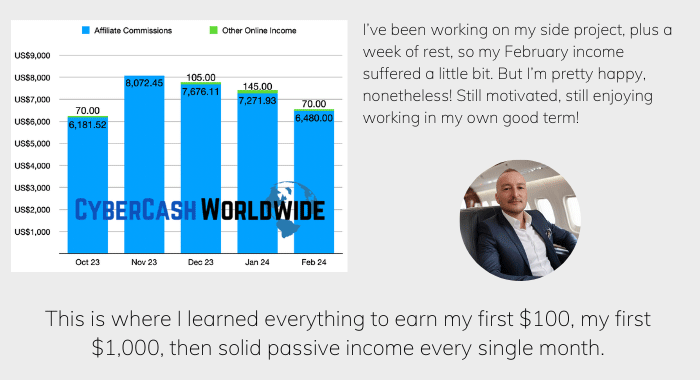
(Real Time) Affiliate Income Report Last Month