
The house remains silent until the very moment you click the link for your morning video conference. Your golden retriever decides that this particular second is the perfect time for a high-volume scratch session against the wooden floor. This scenario plays out in thousands of homes every single day.
You probably feel like your pet waits for the busiest moments to demand your full attention. The reality involves a lack of clear professional boundaries within the domestic environment. You need a method that transforms your living space into a focused work zone. These ideas go far beyond the standard advice of buying a new chew toy or going for a quick walk around the block.
You will learn to use biology and environmental cues to keep your pet calm. Your dog shall become a silent partner in your career success. This is how you reclaim your productivity without feeling like a bad pet owner.
The Olfactory Anchor Strategy
Dogs possess a sense of smell that is vastly more powerful than the human equivalent. You will use this biological reality to signal the start of your professional duties. The air in your office should have a distinct scent that never appears during your leisure time. This aroma acts as a chemical signal that you are now unavailable for interaction. Your pet will learn to associate this scent with a period of rest and silence.
Consistency in the application of the scent remains the most necessary factor for success. You must apply the fragrance to the room exactly five minutes before you log on to your computer. The smell should disappear the moment you finish your final task of the afternoon. This creates a hard line in the mind of the dog regarding your presence. The animal will eventually stop seeking attention once the work scent fills the room.
Peppermint or citrus oils are often the most useful choices for this distinct routine. You should avoid scents that the dog associates with play or outdoor activities. The goal is to find a neutral but noticeable fragrance that defines the workspace. This method requires no verbal correction or physical discipline at any point. Your dog will simply breathe in the air and realize that it is time to nap.
Apply a small amount of essential oil to the underside of your desk. The scent will linger throughout the morning without being overwhelming for you.
Use a timed diffuser that turns off when your shift ends. This ensures the scent does not bleed into your personal time in the evening.
Store a particular work-only candle inside your desk drawer. The ritual of lighting the candle serves as a visual and olfactory cue for both you and the dog.
Sonic Architecture and Brown Noise
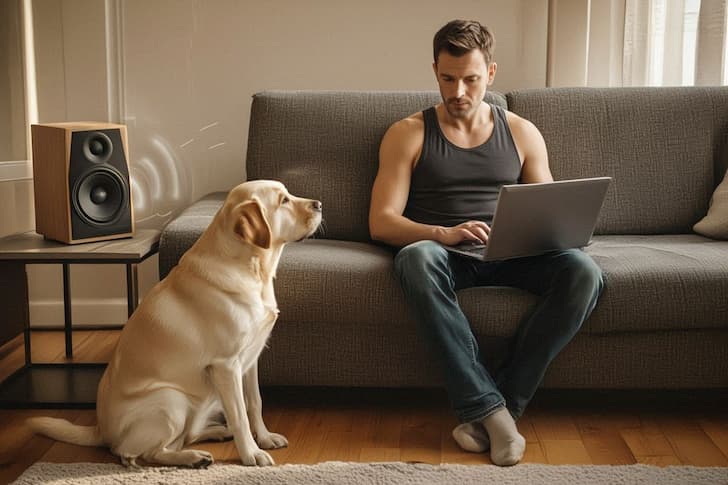
Sound often triggers the most disruptive behaviors in a domestic pet during the day. You will find that a silent house makes your dog hyper-aware of every tiny noise outside. The sound of a leaf blowing across the porch will cause a sudden barking fit. You must create an auditory blanket that covers these unpredictable environmental sounds. This blanket allows the dog to relax into a state of sensory neutrality.
Brown noise is a superior alternative to white noise or soft music for canine relaxation. The deeper frequencies of brown noise mimic the sound of a steady rainstorm or a distant rumble. These sounds help to mask the high-pitched noises that usually alert a dog to a visitor. You should play this audio at a volume that comfortably fills the room. The dog will focus on the steady hum rather than the sounds of the neighborhood.
Specialized audio tracks designed for pets are also a great choice for your home office. You will notice that certain frequencies promote a slower heart rate in mammals. The dog will feel less inclined to guard the door if the audio environment feels safe. This shift in the sonic landscape makes the workspace much more professional. Your meetings will proceed without the background noise of a frantic animal.
Set a dedicated speaker on the floor near the pet bed. This creates a localized zone of calm specifically for the animal.
Select a looping track of heavy rain or thunder. These natural sounds are often very soothing for a dog that feels anxious during the day.
Test the volume levels from the perspective of the dog on the floor. The sound should be audible but not loud enough to cause any irritation.
Visual Boundary Techniques
Physical gates often cause a sense of frustration and anxiety in a curious dog. You should instead use visual markers that define the limits of your workspace. A strip of colorful tape on the hardwood floor works as an excellent barrier. The dog will learn that they must stay on the other side of the line. This method uses psychological boundaries rather than physical force to keep the peace.
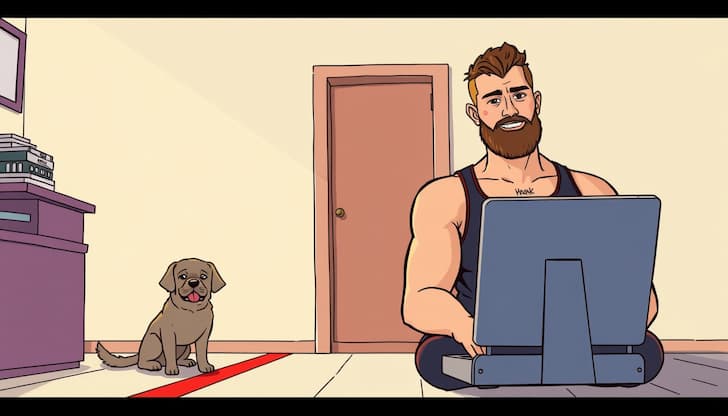
Consistency in the enforcement of this line is the most required element of the training. You must gently point to the tape if the dog attempts to cross into your area. The dog will comprehend that the blue line is a firm boundary for their movement. You will soon be able to sit at your desk without any interruptions. The space behind the line belongs entirely to your professional focus.
Move your chair and equipment to clearly define the working zone in the room. You should ensure that the dog has a comfortable spot just outside the marked area. This allows the pet to feel close to you without being in the way. The separation helps the dog learn independence during the daylight hours. Your pet will respect the visual cue once the pattern becomes a daily habit.
Place a bright piece of masking tape on the floor around your desk. The contrast in color makes the boundary very clear for the animal.
Use a rug to define the area where the dog is allowed to rest. This gives the pet a positive space to go when they want to be near you.
Rotate the direction of your desk to block the view of the doorway. The dog will stay much calmer if they do not see every person that passes the room.

Biological Clock Alignment
Dogs operate on a strict internal clock that governs their energy levels throughout the day. You will achieve the best results if you match your work schedule to their natural rest periods. The most intense meetings should take place during the times when your pet usually naps. Most dogs feel a natural dip in energy during the late morning and early afternoon. You should utilize these windows of silence for your most demanding professional tasks.
The morning routine must focus on the depletion of physical and mental energy. You should involve the dog in a vigorous activity right before you sit down to work. This ensures the animal is ready for a long period of deep sleep. A tired dog is a quiet dog that will not bother you for attention. Your productivity will increase because the pet is too exhausted to cause a distraction.
Adjust the timing of meals to coincide with your most frequent break times. You will find that a full stomach makes a dog much more likely to sleep. The digestion process requires energy and often leads to a period of lethargy. You should plan the largest meal of the day for the hour before your busiest meeting. This strategy keeps the dog occupied with rest while you focus on your screen.
Schedule high-intensity play sessions for thirty minutes before your first call. The rush of activity will help the dog settle down for the rest of the morning.
Feed the dog a larger portion of food during the lunch hour. The post-meal slump will give you a quiet afternoon for deep work.
Track the natural sleeping patterns of your pet for one week. The data will help you decide when to schedule your most sensitive phone calls.

The Tactical Feeding Protocol
Food serves as the primary motivator for almost every dog on the planet. You will use this motivation to keep the dog occupied during your working hours. The standard bowl of kibble is a missed opportunity for a distraction-free morning. You should use puzzle feeders that require time and effort to empty. This keeps the mind of the dog focused on the food instead of your keyboard.
Slow feeders are a necessary addition to your home office strategy. You will find that these devices turn a five-second meal into a thirty-minute activity. The dog must work for every single piece of food they consume. This mental exertion is just as tiring as a walk in the park. Your pet will be much more likely to sleep after a session with a complex feeder.
Frozen treats are another useful way to keep a dog quiet for long periods. You should fill a rubber toy with yogurt or peanut butter and place it in the freezer. The cold temperature makes the treat last much longer than a dry biscuit. This treat should be reserved for the times when you have a high-stakes presentation. The dog will be too busy licking the toy to bark at the mail carrier.
Hide small pieces of kibble around a different room of the house. The search for food will keep the dog busy while you start your workday.
Freeze a mixture of broth and vegetables in a large bowl. The dog will spend a long time licking the ice to reach the snacks inside.
Use a wobbling feeder that drops food only when pushed. This requires the dog to move and think while they eat their breakfast.
Desensitization of Work Triggers
Dogs often react to particular sounds that signal the start of a work session. The click of a laptop lid or the sound of a rolling chair can trigger excitement. You must make these sounds completely boring to the ears of your pet. This process involves repeating the sounds without any follow-up action or interaction. The dog will eventually stop paying attention to the noises of your office.
Perform your work rituals multiple times during your off-hours to break the association. You should sit at your desk and open your computer while you watch television. The dog will see that the office environment does not always mean you are ignoring them. This reduces the frustration the dog feels when you actually start your shift. Your presence in the chair will become a normal and uninteresting event.

The dog will learn that your professional gear is not a toy or a threat. You should leave your headset and mouse on the table where the dog can see them. Familiarity with these objects prevents the dog from investigating them while you are busy. The animal will grow accustomed to the sight and sound of your technology. This makes the transition into the workday much smoother for everyone involved.
Open and close your laptop twenty times throughout the evening. The repetition removes the novelty of the sound for your pet.
Roll your office chair across the floor while you are not working. The dog will learn that the sound of the wheels does not require a reaction.
Wear your work headset while you prepare a meal in the kitchen. This helps the dog realize that the headset does not change your availability.
The Boredom Protocol
Dogs often bark or nudge you because they have learned that these actions get a reaction. You must become the most boring person in the world the moment you sit at your desk. The dog should receive zero eye contact or verbal feedback when they try to distract you. This lack of response teaches the animal that work time is not social time. Your pet will eventually seek out a nap because you are no longer a source of fun.
The absence of a reward is the most successful way to stop an unwanted behavior. You must remain like a statue when the dog brings a toy to your feet. The dog will try several different ways to get your attention before they finally give up. You should only give the dog attention when they are lying down and being quiet. This reinforces the idea that silence is the only way to get a positive reaction.
Persistence is the only way to make this strategy work over the long term. You will feel a sense of guilt the first few times you ignore your pet. The long-term advantage for your career and your peace of mind is worth the effort. The dog will be much happier once they know exactly what to expect from you. Your workspace will remain a calm environment regardless of the energy levels of your pet.
Keep a pair of noise-canceling headphones on your desk at all times. The headphones help you stay focused while you ignore the whines of the dog.
Turn your back to the dog if they jump on your lap. The physical shift in position is a clear sign that you are not going to play.
Reward the dog with a tiny treat only when they have been quiet for ten minutes. The timing of the reward helps the dog link silence with a positive outcome.
Mental Exhaustion Exercises

Physical exercise is helpful but mental exhaustion is often much more successful for dogs. You will find that ten minutes of brain work is equal to an hour of walking. The dog needs to solve problems to tire out their nervous system. You should introduce simple tasks that require the dog to think and focus. This mental load makes the dog crave a nap once the session ends.
The use of scent games is an excellent way to drain the energy of a bored pet. You can hide a high-value treat under one of three cups and ask the dog to find it. This requires the dog to use their nose and their brain simultaneously. The dog will feel a sense of accomplishment once they solve the puzzle. Your workspace will stay quiet while the dog recovers from the mental workout.
Simple obedience commands can be turned into a game of mental focus. You should ask the dog to stay in a particular spot for increasing lengths of time. The effort of staying still is actually very tiring for a high-energy animal. The dog will learn self-control and patience through these daily exercises. This discipline carries over into your work hours and reduces the number of interruptions.
Teach the dog the names of three different toys in the house. The mental effort of identifying the correct toy is very draining for the animal.
Hide a few treats inside a rolled-up towel for the dog to find. The dog must use their paws and nose to unroll the towel and get the snacks.
Practice the "wait" command before every meal or treat. The focus required for the wait helps the dog develop better impulse control.
The transition to a remote work lifestyle requires a shift in the way you interact with your pet. You must treat the home office as a professional environment where the dog is a respected but quiet resident.
The implementation of scent cues, audio masking, and mental puzzles will change the behavior of your pet. Your dog will no longer see your desk as a place for constant play and attention.
The animal will instead find comfort in the predictable routine of your workday. You will notice a significant improvement in your focus and your professional results. The dog will also feel more relaxed because they know what is expected of them during the day. Success comes from the consistency of your actions and the clarity of your boundaries.
Your home office will finally become the productive haven you always wanted it to be. Your commitment to these new habits ensures that the house stays quiet for everyone. The peace in your home will last for many years to come.
How I "Finally" Make Over $7,000 Monthly Income
"The most valuable thing I've ever done!"
