
Look, I get it - you've heard this song before. Content marketing gets preached from every digital rooftop as the silver bullet for business growth. The usual suspects parade out with their predictable advice: create valuable blog posts, optimize for SEO, build an email list, post consistently on social channels, measure your metrics...
Everyone nods along while secretly wondering why their carefully crafted articles gather digital dust. These recycled strategies have been repackaged and resold so many times that they've lost whatever spark they once had. The whole industry feels like an exhausted hamster on a wheel, spinning the same tired narratives while expecting different results.
Give me just two minutes of your time right now. What I'm about to reveal will flip everything you thought you knew about content marketing completely upside down. This perspective shift has helped businesses throw out their content calendars and triple their results.

Forget Content Creation - Become a Professional Eavesdropper Instead
Content marketing has absolutely nothing to do with creating content. That's right - the thing with "content" literally in its name shouldn't focus on content at all. The real secret? Listening so hard your ears hurt. Most marketers treat their work like they're broadcasting from a lonely radio tower, shouting messages into the void and hoping someone tunes in. They obsess over their brand voice, their messaging pillars, their editorial calendars, and completely miss what's happening right in front of them.
The truth is that your customers are already having conversations about their problems, frustrations, dreams, and desires every single day. They're ranting in Facebook groups at 2 AM. They're asking desperate questions on Reddit threads. They're leaving detailed reviews explaining exactly what they wish existed. They're sending complaint emails to your competitors that reveal every gap in the market.
Your job isn't to create anything - your job is to lurk like your business depends on it, because it does.
Stop writing blog posts for three months. Instead, spend two hours daily reading every comment, review, forum post, and conversation in your industry. Watch what makes people angry enough to type in ALL CAPS. Notice which questions appear seventeen times in different words. Pay attention to the phrases people use when they're confused, excited, or disappointed. You'll discover that the market is literally writing your content strategy for you, word for word.
What Do You Advocate?
The Airport Lounge Technique
Pretend you're sitting in an airport lounge next to two strangers discussing exactly what you sell. Would you interrupt them to deliver your brand's key messaging points? Of course not - you'd listen quietly while they reveal their decision-making process.
One person explains why they abandoned your competitor's product. The other describes a feature they desperately wish existed. They use specific words that resonate emotionally. This conversation hands you more value than a dozen focus groups ever could.
The Complaint Mining Operation
Negative Amazon reviews for competing products contain pure gold. Someone bought something hoping it would solve their problem, got disappointed, and took time to explain precisely why it failed them.
They're not being polite or political - they're venting real frustration. Read 100 of these reviews and patterns emerge so clearly you could write your entire positioning statement from them. Better yet, you'll know exactly which problems people care enough about to complain publicly.
The 3 AM Question Hunt
Search Twitter for questions asked between midnight and 4 AM in your industry. People asking questions at those hours aren't casually curious - they're desperate. Someone can't sleep because they can't figure out how to fix their problem.
Their defenses are down, their patience is gone, and they're typing exactly what's on their mind. These questions reveal what people actually struggle with versus what industry experts assume they struggle with.
The Competitor Comment Section Safari
Your competitors' blog posts, videos, and social media posts attract comments from your exact target customer. These people raised their hands by engaging with your competitor's content. Now read what they wrote - are they agreeing enthusiastically?
Asking follow-up questions? Politely disagreeing? Sharing their own related struggles? Each comment is a window into what resonates and what falls flat. Map out these reactions and you'll know exactly what angles work and which ones to avoid.
Stop Solving Problems - Start Validating Feelings Instead
Here's where things get weird, but stay with me. The second biggest lie about content marketing is that you need to provide solutions. Wrong, wrong, spectacularly wrong. People don't want answers nearly as much as they want someone to finally understand what they're going through. Think about the last time you complained to a friend - did you want them to fix your problem, or did you want them to say "Yes! That's exactly how I felt too!" and make you feel less alone?
Most content sounds like an instruction manual written by a robot who has never experienced human emotion. The writing is technically correct but emotionally bankrupt. "Here are five steps to improve your conversion rate." Cool, thanks, very helpful - and completely forgettable because it doesn't acknowledge the sick feeling in your stomach when you've spent thousands on ads that nobody clicks. The emotion matters more than the tactic.
Your best content doesn't teach - it articulates. Put into words what your customer feels but hasn't been able to express clearly. Describe their situation so accurately that they get goosebumps reading it. When someone says "It's like you read my mind," you've hit the mark. That's when they bookmark your page, share it with colleagues, and remember your brand name. The solution can come later, maybe in a different piece of content, or maybe not at all.
This flips traditional content strategy on its head. Most businesses create content by asking "What should we teach people?" The better question is "What secret frustration does our customer whisper to themselves that nobody else is talking about publicly?" Find that whisper and amplify it.
The Shower Thought Mirror
Your customers have recurring thoughts while doing mindless tasks - showering, commuting, falling asleep. These thoughts follow patterns. "Why does everyone make this seem so easy when I find it so hard?" or "Am I the only one who thinks this whole thing is backwards?" or "What if I'm doing everything right but it still doesn't work?" Write content that serves as a mirror for these internal monologues. Don't rush to reassure them or fix the problem. Just reflect the thought back with clarity and accuracy.
The Confession Booth Strategy
Create content that reads like a confession someone finally feels safe making. "I've been in marketing for eight years and I still don't really get what a good bounce rate is supposed to be." Permission to admit uncertainty is valuable.
Your customer walks around pretending they have it all figured out because everyone else seems so confident. Content that says "Yeah, this part makes no sense and we all pretend it does" creates instant connection. The relief of honesty beats the satisfaction of getting answers.
The Worst Day Documentation
Describe in painful detail what your customer's worst day looks like. Not the day where they need your product - the day where everything that made them need your product comes crashing down. The marketer who just got told their campaign failed and now has to face their boss.
The freelancer who lost their biggest client and doesn't know how to pay rent. The consultant whose expertise just got questioned in front of a room full of people. Paint that picture so vividly they feel seen. Solutions can wait - first make them feel less alone in their worst moment.
The Invisible Struggle Spotlight
Every industry has struggles that everyone experiences but nobody discusses openly because they seem too basic or too embarrassing. The writer who still doesn't know when to use "that" versus "which." The developer who googles basic syntax daily. The designer who secretly uses templates. These invisible struggles create shame. Content that drags them into the light with kindness and humor? That content gets shared widely because it finally gives people permission to stop pretending.

Abandon Your Expertise - Channel Your Confusion Instead
The third catastrophic mistake that content marketers make is trying to sound like the smartest person in the room. Newsflash: nobody trusts the smartest person in the room anymore. We're drowning in experts who confidently explain things we don't understand using terminology we don't recognize while making assumptions about what we already know. It's exhausting and alienating.
The paradox is that you become more trustworthy when you admit what confuses you. Your customer doesn't want to learn from someone who has never struggled - they want guidance from someone who remembers exactly how hard this was to figure out. The best content maps the confusion, not just the solution. Show your work. Explain the wrong turns you took. Admit which parts still feel unclear even now.
This is terrifying for businesses because we're taught to project authority. Admitting confusion feels like admitting weakness. But here's what actually happens: when you say "This part confused me for months until I realized..." your customer relaxes. Their shoulders drop. Their breathing steadies. Finally, someone who isn't pretending this was obvious from the start.
The goal shifts from demonstrating expertise to translating complexity. You're not standing on a stage holding forth - you're sitting next to someone helping them make sense of something that initially baffled you too. That's a completely different energy and it produces completely different results.
The "I Used To Think" Framework
Structure content around the phrase "I used to think X, but then I discovered Y." This admits your previous confusion while showing growth. "I used to think content marketing meant posting daily blogs, but then I discovered it actually means listening daily to conversations."
You're not claiming you always knew the answer - you're showing the before and after. Your customer sees themselves in the "before" and wants to get to your "after."
The Question Pile Strategy
List out every stupid question you had when you were learning your skill. Not the sophisticated questions - the really basic, embarrassing ones that made you feel dumb. "Does anyone actually read these things?" "What if I have nothing original to say?" "How do people come up with topics?" Answer these questions with the kindness you wish someone had shown you.
Your customer has these exact questions and is relieved someone finally addressed them directly.
The Multiple Attempts Reality
Document how many times you failed before something worked. "I tried this approach seven times before it clicked." Specificity matters - the number seven is more believable than saying "several times." Walk through attempts one through six, explaining what went wrong each time. Show the progression of understanding.
Let your customer see that mastery is built on failed experiments, not instant genius. This makes success feel accessible rather than reserved for naturally talented people.

The Still Learning Admission
Admit what you still find difficult or confusing even now. "I've been doing this for five years and I still second-guess my headlines every single time." This is radical honesty in a sea of false confidence. Your customer assumes experts have it all figured out.
Learning that even experienced people struggle with certain aspects normalizes their own ongoing challenges. Perfectionism loses its grip when you model that competence and confusion coexist comfortably.
So What Is Content Marketing About?
So here's the truth about content marketing that nobody teaches in courses or conferences: stop creating, start listening. Stop solving, start validating. Stop projecting expertise, start admitting confusion. Everything you learned about content marketing told you to be loud, smart, and helpful. That path is crowded with mediocre results and exhausted marketers wondering why their content doesn't connect.
The backwards approach works because it's built on human psychology rather than marketing theory. People crave being understood more than being taught. They trust vulnerable honesty more than polished authority. They engage with content that reflects their reality back to them, not content that lectures from a distance. Your competitors are all running in one direction - turn around and run the opposite way.
This requires courage because it means abandoning what looks like "professional" content marketing. Your blog posts might sound more like conversations. Your writing might admit uncertainty. Your strategy might involve more reading than writing. And that's precisely why it works - because everyone else is doing the opposite and wondering why nobody pays attention. The market rewards what's different, not what's correct according to outdated best practices.
Start tomorrow by closing your content calendar and opening your ears. Spend a week just listening before you write a single word. Let what you hear shape what you say. Trust that your customers are already telling you exactly what they need to hear - you just need to hear them first.
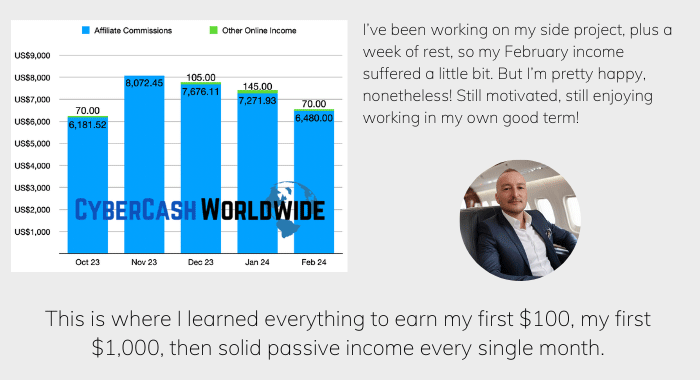
(Real Time) Affiliate Income Report Last Month

Hello, I like your website and found it very informative. I just wanted to know what do you think is the best way to market that is cost efficient and can save time?
I get that content is very important. Keep up the good work. Please give me whatever tips possible
Hi Nicole, how’re you doing? Thanks for visiting my site. That would be a million dollar question that can only be answered by experience. We all either pay to save time or spend a good time to learn how to do it ourselves to save money. Start learning the basics, try to appreciate what you’ve learned each day and be persistent, I guess.
It’s great to know what content marketing really is, I knew it was about writing lots of ‘contents’ in your website, but didn’t know it applies to other forms like video and podcast marketing. So are you saying you shouldn’t try non-content marketing at all unless you have something striking to sell?
Hi Melissa, thanks for your comment. Marketing via social media is a typical “non-content”. So it’s something a lot of us are already doing. But it’s difficult to convince buyers to buy without using a content (=words), unless the object is shiny, for example jewellery, or beautiful new Mac that I’ve mentioned, to impress visually. And that was only my personal example – I doubt many would just buy a new Mac because the image ad looks good. Most of us would like someone else to verify detailed specifications, pro’s and con’s before deciding to make a purchase, where they can find a value in the content itself. I hope this make sense.