
Does "introvert-extrovert" mean anything to you? People often categorize personality using binary labels that feel restrictive. Your internal wiring dictates how you interact with the world every single day. Most folks think introversion equals shyness, but that idea misses the mark entirely. Real growth happens when you look at energy sources instead of social skills. You probably feel a tug-of-war between solitude and society constantly.
A search for your place on this spectrum requires more than just a quick quiz result. Your brain reacts to stimulation in ways that define your comfort levels in loud rooms or quiet corners. Silence serves a purpose for many, while others find life in the noise. You deserve a deep look at how these traits manifest in your life without the usual fluff.
Every interaction carries a cost or a gain for your mental battery. Let's explore the mechanics of your social soul with precision. You will see your habits in a whole new light soon.
Extroverts say, "Let's agree". While I, an introvert say, "I respect your point. Now I'll go and make my own decision."
This psychological analysis was first introduced by Carl Jung in 1921. It may sound pretty much that way - the introvert is thoughtful while the extrovert (or often called "extravert") is energetic. The extrovert is interested in joining the activities of the world while the introvert is not so. But the over the past century, the theory's been studied and discussed in many ways and interpreted in the way we all understand it today.
Broadly speaking, introverts are people who recharge their energy by spending time alone, whereas extroverts recharge themselves by socialising more.
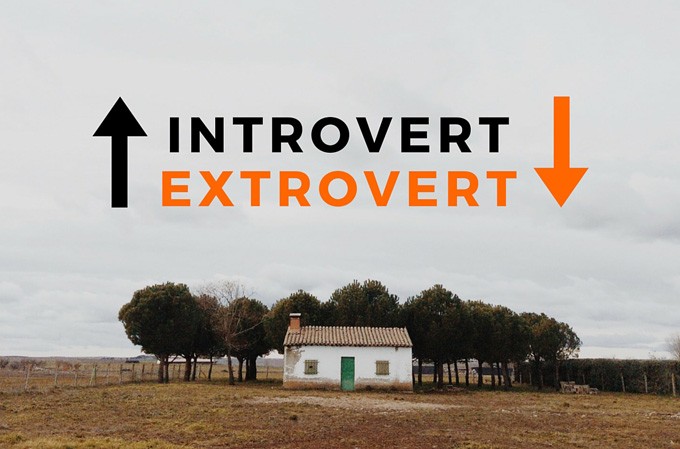
The Internal Battery Theory
You view your energy as a finite resource that needs careful management. Every social event drains a bit of that stored power from your system. You often find yourself checking the time during large parties or long meetings. Recovery requires a period of total isolation to reset your internal clock. Your mind functions best when you have space to breathe without interference.
Someone else likely gains energy from the exact same environment that tires you. They feel a surge of excitement when the room fills with voices and laughter. Crowds act as a charging station for their spirits rather than a drain. You notice their mood lift as the night progresses into late hours. Their mental state thrives on the constant exchange of external stimuli.
Neither method of recharging is superior to the other in a vacuum. You simply possess a different threshold for what feels like "too much" input. Your preference for quiet stems from a highly reactive nervous system. People mistake such a physiological response for a lack of interest in others. You actually value connection, but you prefer it in controlled, manageable doses.
- Schedule a buffer period after your work day ends to sit in silence. You need a transition time to shift from professional demands to personal relaxation.
- Pay attention to the physical cues of exhaustion before your mood drops. Your body sends signals like a heavy chest or mental fog when stimulation peaks.
- Communicate your need for space to your friends without feeling guilty. People will respect your limits when you state them clearly and kindly.
Social Osmosis and Energy Leaks
Environments influence your mood more than you likely realize at first glance. You absorb the tension or the excitement of a room like a sponge. High-pressure social situations leave you feeling hollowed out by the end of the hour. Your focus shifts toward the exit when the noise level crosses a certain line. Solitude acts as the only filter to clear out that borrowed emotional weight.
Extroverts often find that silence feels heavy or even slightly unnerving to them. They seek out external feedback to confirm their own thoughts and feelings. You could see them reach for a phone the moment they are alone. Interaction keeps their mental gears moving at a steady, comfortable pace for hours. Their identity flourishes when they have a sounding board in the vicinity.
You should recognize that your social battery has a set capacity limit. Overextending yourself leads to a burnout that takes days to fully repair. Your friends should see that your absence is a form of self-care. Every choice to stay home is a choice to preserve your mental health. You will find more satisfaction in events when you attend them by choice.
- Identify the people who leave you feeling refreshed rather than drained. You should prioritize these connections to maintain a healthy social life.
- Limit your time at large gatherings to a pre-determined two-hour window. You give yourself permission to leave early while still showing up for others.
- Choose smaller venues for dinner to avoid the roar of background noise. Quiet spaces allow you to focus on the conversation instead of the distractions.
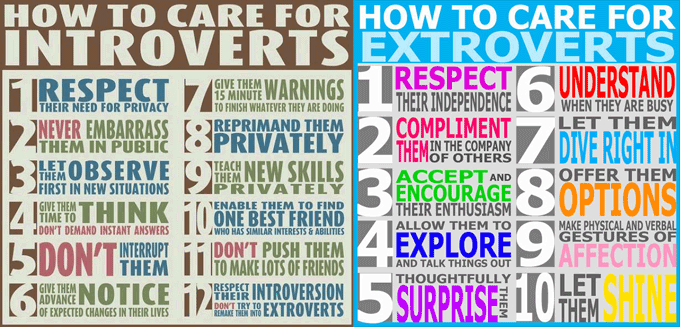
How To Care For Introverts
- Respect their need for privacy.
- Never embarrass them in public.
- Let them observe first in new situations.
- Give them time to think. Don't demand instant answers.
- Don't interrupt them.
- Give them advance notice of expected changes in their lives.
- Give them 15 minute warnings to finish whatever they are doing.
- Reprimand them privately.
- Teach them new skills privately.
- Enable them to find one best friend who has similar interests and abilities.
- Don't push them to make lots of friends.
- Respect their introversion. Don't try to remake them into extroverts.
How To Care For Extroverts
- Respect their independence.
- Compliment them in the company of others.
- Accept and encourage their enthusiasm.
- Allow them to explore and talk things out.
- Thoughtfully surprise them.
- Understand when they are busy.
- Let them dive right in.
- Offer them options.
- Make physical and verbal gestures of affection.
- Let them SHINE.
How Useful Is This Information?
When I first browsed through the lists, my first reaction was;
- Introvert No. 2- "Never embarrass them in public" - Well, never embarrass anyone in public!
- Extrovert No. 1 - "Respect their independence" - When do we not respect anyone's independence?
- Extrovert No. 6 - "Understand when they are busy" - You need to fix your problem first if you don't understand when anyone is busy.
Well, we are all different. Some are naturally good at ridiculing others in public and turning it into a decent joke. Some think that they're helping you when they're actually disrupting your work. So some of the items in that list that don't make sense to you can actually help you accept the behaviours of others that you don't normally understand.
You may find one side more relatable to you than the other. I find the left-hand side more relatable, making me close to an introvert. I don't fully understand the rationale behind some of the points of the extroverts, such as "compliment them in the company of others". So what can I do? There is little else to do other than to remember these are the things you can do to make extroverts feel special.
Verbal vs Non-Verbal Processing Styles
Your thoughts often live in a complex web inside your own head. You prefer to reach a conclusion before you speak a single word aloud. Silence during a meeting does not mean you lack ideas or opinions. You simply choose to refine your concepts before you share them with the group. Your best work occurs when you have time to sit with a problem.
Extroverts often need to hear their own voice to know what they think. They use conversation as a way to organize their messy or fleeting ideas. You will notice them talk through a problem until they find the solution. Silence feels like a vacuum to them that they must fill with sound. Their verbal speed matches the pace of their internal logic and reasoning.
Miscommunication happens when these two styles clash in a high-stress environment. You feel interrupted, while they feel like they are helping you think. They wonder why you stay quiet, while you wonder why they won't stop. Cooperation requires a mutual respect for these different ways of handling information. You will succeed when you find a middle ground for your communication.
Ask for an agenda before a meeting to prepare your thoughts in advance. You will feel more confident when you have time to reflect on the topics.
Tell your partner that you need ten minutes to think before responding. You avoid reactive arguments by giving your brain the space it requires to cool.
Write down your main points if you feel overwhelmed during a fast-paced talk. Notes keep you grounded when the verbal exchange becomes too chaotic for your taste.
Sensory Overload and Selective Filters
Bright lights and loud music affect your brain more intensely than others. Your nervous system is tuned to a higher sensitivity than the average person. Small details catch your eye and demand your attention throughout the entire day. You feel a sense of relief when you step into a dim room. Calmness returns to your body once the external static finally fades away.
Some people actually require that high level of input to feel fully awake. They find a crowded street or a busy office to be quite invigorating. Their brains filter out the chaos and focus on the thrill of the moment. You see them thrive in jobs that demand multitasking and quick shifts. High-intensity settings give them the fuel they need to stay productive and alert.
Your biology determines how much data you are able to handle at any one time. You are not "broken" because you hate open-office plans or loud concert venues. Your brain simply processes every single sound as a high-priority piece of information. You will feel much better when you honor your need for sensory peace. Peace is a requirement for your long-term focus and your general happiness.
Invest in high-quality noise-canceling headphones for your daily commute or office work. You create a portable sanctuary that blocks out the distracting sounds of the world.
Carry a small fidget object to help ground your senses in overwhelming spots. Physical touch redirects your focus when your ears and eyes feel under attack.
Use low-light settings on your devices to reduce the strain on your vision. Soft lighting mimics the natural environments that help your brain stay relaxed and calm.
How I "Finally" Make Over $7,000 Monthly Income
"The most valuable thing I've ever done!"
The Dopamine Sensitivity Gap
Dopamine serves as the chemical reward for seeking out new experiences and social risks. Your brain requires much less of this chemical to feel satisfied or happy. Excess dopamine feels like a surge of static that creates anxiety or discomfort. You prefer the steady hum of acetylcholine which rewards quiet focus and deep thought. A chemical difference explains why you avoid large parties or risky ventures.
Extroverts possess a lower sensitivity to dopamine and require more of it to feel good. They seek out novel situations and social praise to trigger a reward response. Adventure and risk act as the necessary fuel for their mental well-being. You notice they get bored quickly when things stay quiet for too long. Their pursuit of excitement is a literal biological drive to feel balanced.
Comprehending this chemical baseline helps you stop comparing your social needs to others. You are not boring for wanting a night in with a good book. Your brain is simply getting its reward from internal reflection rather than external noise. Acceptance of this fact brings a great deal of peace to your life. You are able to find your way through the world without feeling like an outsider.
Choose activities that reward your focus like gardening or reading a book. You will feel a deeper sense of accomplishment from these low-stimulation hobbies.
Avoid comparing your social calendar to the lives of your extroverted peers. Your needs are different because your brain chemistry operates on a separate scale.
Plan one adventure per month to step outside your comfort zone safely. Small doses of novelty keep your mind sharp without leading to total exhaustion.
Professional Success for the Quiet Soul
Office life often feels designed for the most vocal members of the team. You could feel overlooked during brainstorming sessions where the fastest speaker wins. Quality of thought does not always correlate with the volume of a voice. Your ability to listen and observe makes you a formidable asset in any group. Success arrives when you leverage your natural tendency toward deep, careful analysis.
Leaders who talk less often hear more about the actual problems within a company. You are able to spot trends and risks that others miss in the noise. Team members feel safe sharing their honest opinions with a leader who listens. Your calm presence stabilizes the room during periods of high stress or change. Quiet leadership is a force that builds strong, resilient cultures over time.
You should find ways to showcase your work that do not require constant shouting. Written reports or one-on-one meetings allow your intelligence to shine without the drain. Your results will speak for themselves if you document your progress consistently. Employers value the reliability and focus that you bring to the office daily. You do not need to change your personality to reach the top.
Send a follow-up email after a meeting to share your deeper reflections. You ensure your ideas are heard while giving yourself time to think clearly.
Find a mentor who perceives the value of a quiet and steady professional. They will guide you through the corporate world using methods that suit your nature.
Request a quiet workspace or a remote work day to maximize your focus. Productivity increases when you remove the constant interruptions of a busy office.
Networking Tactics for the Introverted Mind
Large networking events feel like a gauntlet for those who value deep connection. You likely dread the small talk and the constant pressure to mingle with strangers. High-energy rooms leave you looking for the nearest exit after only thirty minutes. Surface-level conversations feel like a waste of your precious mental energy and time. You prefer to know a person deeply rather than knowing a hundred names briefly.
Real networking happens in the quiet moments between the official speeches and events. You are able to build strong alliances through genuine one-on-one conversations and mutual interests. Focus on finding one or two people who share your professional values. Depth of connection will always beat the breadth of a massive stack of cards. Your quiet nature allows you to ask the right questions at the right time.
Preparation is the key to surviving any social event that feels mandatory. You will feel more comfortable if you have a few go-to topics ready. Set a target to meet only three new people before you allow yourself to leave. Success is measured by the quality of the interaction rather than the duration. You are in control of your social schedule and your professional growth.
Invite a potential contact for a quiet coffee instead of a loud lunch. Small settings allow for a more meaningful exchange of ideas and professional aims.
Research the attendees before an event to find common ground in advance. Preparation reduces the anxiety of meeting new people and starting a talk.
Volunteer for a defined role at an event to give yourself a purpose. Activity yields a natural reason to talk to others without the stress of small talk.
The Misconception of Shyness and Social Anxiety
Shyness is a fear of social judgment while introversion is a preference for low stimulation. You are able to be a confident introvert who simply enjoys being alone most days. People often confuse the two because the outward behavior looks very similar. You might not speak much, but it is not always because you are afraid. Silence is often a choice to listen rather than a failure to interact.
Social anxiety is a clinical condition that creates a physical reaction to human contact. You feel a sense of dread or panic when you have to speak in public. Introversion does not require a cure because it is a healthy personality trait. You should distinguish between a need for rest and a fear of people. Clarity on this distinction helps you seek the right kind of personal support.
Society often pushes quiet people to step out more as if they are broken. You are not a project that needs fixing or a person who needs to be loud. Your shell is actually a healthy boundary that protects your mental energy and focus. Respect your own limits and tell others that you are simply a person of few words. You will find that most people are happy to let you be yourself.
Explain to your friends that you are not upset when you stay quiet. Clarity prevents people from assuming you are angry or anxious during a group hang.
Practice public speaking to build confidence without losing your introverted core. Skill building is different from changing who you are as a person.
Seek professional help if your fear of people stops you from living your life. Anxiety is a hurdle that you are able to overcome with the right guidance.

Romantic Partnerships across the Personality Spectrum
Relationships thrive when both partners respect the different needs of their internal batteries. You could find love with an extrovert who brings color and noise to your life. Contrast creates a steady rhythm that keeps the relationship from becoming too stagnant. They will pull you out of your comfort zone, while you ground them in peace. Such a dynamic requires constant communication and a lack of judgment from both sides.
Problems arise when one partner views the other's needs as a personal rejection. Your need for a solo night is not a sign that you no longer care. They could feel lonely when you pull away to recharge your mental stores. You must explain that your solitude is a way to become a better partner for them. Love is about finding a pace that works for both of your distinct souls.
Dating other introverts creates a quiet and cozy life that many people envy. You will enjoy long silences and low-key weekends without any pressure to perform. The difficulty lies in making sure you both do not become too isolated from the world. You should encourage each other to step out and see friends on a regular basis. Harmony is possible when you both value the same quiet way of living and loving.
Create a "no-talking" hour in your home to allow for parallel play. You both stay in the same room while doing your own activities in total peace.
Attend social events separately if your energy levels do not match up. You give your partner the freedom to stay late while you head home to rest.
Plan dates that focus on activities rather than just talking to reduce pressure. Movies or museums allow you to connect without the need for constant verbal output.
Parenting and Energy Management
Raising children is an intense sensory experience that never truly stops for a break. You will find that the noise and the constant demands leave you feeling frayed. Little voices and sticky hands require a level of presence that is exhausting for you. Your nervous system is on high alert from the moment the sun comes up. Parenting as an introvert is a feat of endurance that deserves a lot of credit.
Kids often mirror the energy of the house and the people around them. You will notice that a quiet parent often creates a more peaceful home environment. Your children will learn the value of solitude and reflection from your own habits. You are able to teach them how to sit with their thoughts and play alone. Such a lesson is a gift that will serve them well throughout their entire lives.
You must find pockets of time to be alone if you want to be a good parent. Wake up an hour early or hire a sitter so you are able to walk in the woods. Your patience will increase when your mental battery is not in the red zone. Do not feel guilty for needing a break from the people you love the most. You are a better caregiver when you are not running on empty every single day.
Establish a "quiet time" in the afternoon where everyone reads or naps. You create a mandatory window of peace for yourself and for your children.
Share your needs with your partner so they can take the lead on loud play. Coordination ensures that you do not reach a breaking point during the weekend.
Use noise-dampening earplugs to soften the roar of a busy household daily. You reduce the sensory load without losing your ability to hear pivotal things.
The History of the Introvert Label
Psychologists first identified these traits nearly a century ago to explain human behavior. Carl Jung popularized the terms to describe where people direct their mental energy. You likely see these labels everywhere now, from job interviews to dating apps. History shows that the world often favors the loud over the quiet. You belong to a long lineage of thinkers who valued the inner life more than the crowd.
Society shifted its focus during the industrial revolution toward more public-facing roles. Charisma became a trait that people valued more than deep, quiet contemplation in the office. You saw the rise of the "extrovert ideal" in schools and corporate offices. Success seemed reserved for those who could command a room with their voice. Your natural inclination toward solitude suddenly looked like a deficit to the masses for decades.
Modern research finally validates the strengths of the quieter half of the population. Science proves that introverts bring deep focus and careful observation to any team. You bring a perspective that others often miss in their rush to speak. The tide is turning toward a more steady view of different personality types. You should feel proud of the way your brain interacts with the world every day.
Read about the lives of famous introverts like Albert Einstein or Eleanor Roosevelt. You will see that silence often precedes the most world-altering ideas and actions.
Refuse to apologize for your quiet nature during social or professional events. You yield a steady presence that is just as requisite as loud enthusiasm.
Appreciate the fact that you do not need a crowd to feel whole. Your ability to find contentment in your own company is a rare strength.
Creating a Home Sanctuary
Your living space should be a place where the world is not able to reach you. You need a room where the colors and the lights are under your control. Soft textures and quiet corners help your nervous system relax after a long day. Your home is the charging station for your soul and your mental health. Every item in your house should contribute to a sense of peace and safety.
Living with others requires you to set firm boundaries regarding your personal space. You should have a designated chair or a corner that belongs only to you. Tell your roommates or your family that you are "off duty" when you are there. People will learn to respect your need for stillness if you are consistent. Your home life will be much happier when you have a place to hide.
Minimalism is a popular choice for those who feel overwhelmed by visual clutter. You will find that fewer items in your room lead to fewer thoughts in your head. Clear surfaces grant your brain a rest from the constant processing of visual data. Your environment reflects your internal state and helps you maintain your focus. A calm home is the foundation of a successful life for any introvert.
Use blackout curtains to block out the street lights and the world outside. Darkness signals to your brain that it is time to stop processing and start resting.
Keep your bedroom a tech-free zone to improve the quality of your sleep. You remove the temptation to scroll and the blue light that keeps you awake.
Add plants to your space to bring a sense of nature and calm indoors. Greenery improves the air and yields a quiet companion for your daily reflection.
Friendship in an Always-On Digital Culture
Social media creates a world where everyone is expected to be available at all times. You could feel a sense of guilt when you do not reply to a text instantly. The constant pings and notifications act like a slow leak for your mental energy. You prefer deep, meaningful letters or long talks over a series of brief emojis. Your digital habits should reflect your need for depth and your hate for shallow noise.
Friends who truly know you will not be offended by your need for digital silence. They will realize that your absence on a group chat is not a personal slight. Quality friends will wait for your thoughtful reply instead of demanding an instant reaction. You should cultivate a circle that values your presence over your constant availability. Real connection does not require you to be online every single hour of the day.
You should set boundaries for your phone usage to protect your mental peace. Turn off notifications for everything except the most requisite people in your life. Schedule a time each day to check your messages so they do not interrupt your flow. Your phone should be a resource that you use on your own terms. You are the master of your own attention and your own social life.
Tell your friends that you prefer voice notes or long emails over quick texts. You are able to express your thoughts more clearly without the pressure of a live talk.
Put your phone in another room during your periods of deep work or rest. Distance reduces the urge to check for updates and allows your brain to fully relax.
Schedule one-on-one time with your best friends to maintain the connection. Focused attention is more valuable to you than being part of a large group chat.
Solo Travel and Discovery
Travel is often marketed as a social activity involving groups and loud tours. You could find more happiness in exploring a new city on your own terms. Solo travel allows you to follow your own curiosity without having to compromise. You are able to spend three hours in a museum or a park without anyone complaining. Such freedom is the ultimate luxury for a person who values their own company.
The world looks different when you are not busy talking to a travel companion. You notice the small details of the buildings and the local way of life. Quiet observation leads to a deeper perception of the places you visit. You are able to meet locals more easily when you are alone and approachable. Your memories will be more vivid because you were fully present in the moment.
Planning a trip requires you to think about your energy levels at every single step. You should book a private room rather than a hostel to ensure you are able to recharge. Build in rest days where you do nothing but sit in a cafe and watch. Travel should be a source of inspiration rather than a cause of total exhaustion. You will return home feeling refreshed if you travel at your own slow pace.
Choose a destination that is known for its natural beauty and quiet spots. Nature yields a peaceful backdrop for your adventures without the noise of a big city.
Eat at a restaurant with a book to enjoy your meal without any pressure. You will find that many people travel alone and it is a perfectly normal choice.
Keep a journal of your travels to process your experiences in a quiet way. Writing helps you remember the details and the feelings of your time abroad.
The Future of a World that Values Both Types
The world is slowly moving toward a better appreciation of diverse personality types. Remote work and digital resources allow introverts to thrive in ways that were once impossible. You no longer have to perform the role of the extrovert to be seen as successful. Schools are starting to realize that quiet students need different ways to participate. Such a shift is a sign of progress for a more inclusive and thoughtful society.
Introverts and extroverts need each other to solve the complex problems of the future. You bring the depth and the focus, while they bring the energy and the outreach. Neither group is able to succeed for long without the strengths of the other side. Cooperation will be the most requisite skill in the decades to come for everyone. You should look for ways to partner with people who complement your natural style.
Your personality is a gift that you should share with the world on your own terms. Do not let the noise of the crowd drown out the quiet voice in your head. You have a purpose that only you are able to fulfill with your distinct perspective. Stay true to your nature and the rest of your life will fall into place. The future is quiet, bright, and full of potential for someone like you.
Support policies that allow for flexible work and quiet office spaces. You help create a better world for everyone by speaking up for your needs.
Teach the next generation that there is nothing wrong with being a quiet person. Confidence starts with the knowledge that you are fine exactly as you are today.
Focus on the strengths you bring to the table rather than your perceived flaws. Your ability to think before you speak is a superpower in a world that never stops talking.
Does Introvert Extrovert Mean To You?
Acceptance of your true nature is the first step toward a peaceful life. You no longer need to pretend to be someone else for the sake of others. Every person brings a different frequency to the table in any given room. Your quiet strength is just as requisite as the loudest voice in the conversation. Society needs both the thinkers and the doers to function at its absolute best. You will find that life becomes much easier when you stop fighting your biology.
Respect your limits and honor your needs without any shred of shame or regret. The world is large enough for every type of personality to find success. You possess the wisdom to traverse your path with clarity and steady purpose now. Keep moving forward at your own pace and trust your internal compass always. Your future looks bright when you live in alignment with your inner core.
What Do You Advocate?

Thank you, I have just been searching for info approximately this topic for a while and yours is the greatest I have discovered till now. Unfortunately I don’t know what I’m talking about because all I wanted to do was to spam, and obviously the link I placed here has been removed by the moderator. What concerning the conclusion? I’m such an extrovert that I never learn it. I’m so sorry.
Thanks for your zero-valuable comment, and you’re welcome.
Always looking forward to your next post from your introverted point of view. Because I’m nothing without you. I am useless, have nothing better to do than to copy and paste silly messages like this. Help me!!!
Sorry you’re doomed. This is the end of the road for you, but thank you for your comment. See you in the next life!
Thank you for such an inspiring post. I’m a terrible introvert and shy but this post encourages me that I can still express myself online so nobody can interrupt me and that’s enough for me.
Thanks for your comment, glad the post helps. Wish you all the best.
This article is a masterpiece of clarity and insight. Your extensive research and expert writing have resulted in a truly exceptional piece. I’m thoroughly impressed by your ability to convey detailed information so effectively. This is an outstanding example of high-quality writing. Regards, Pasang Iklan Properti Gratis
Thank you for your comment Iklan, you’re so funny. We’d love to hear from you more. We wish you all the best!
I’m genuinely impressed by this article. The depth of your research and the clarity with which you present your findings are outstanding. Your ability to make complex information accessible and engaging is truly commendable. Thank you for such an exceptional read. Regards, Pasang Iklan Properti Gratis
Thank you for your comment, but you’re not making sense. Which part do you find “truly commendable” particularly?
I’m an introvert by nature. Introverts sometimes appear to be extroverts, especially around people they like or in situations where socializing is required. I can be so talkative. The things I do with my closest friends are silly things and I get loud sometimes. I love being with my friends, having dinner parties, clubbing, cracking jokes, whatever. But at the end of the day, I need a space to recharge myself, I need to be alone. My friends understand me now but not everyone does. They think I fear other people, but that’s not true. It’s just the social interaction drains me. That’s all.
This is a very interesting article. Yes, it is mean to me. I awared that I am an introvert, always think too much before do or say something because want to be carefull, don’t want to regret later, not spontaneous person. And yes, you are right that introverts fond of writing to express their thoughts and ideas. For example : I have a personal account with more than 1,000 friends and a fan page / niche account with 50 followers. If I were an extrovert, consider the high traffics potential, I will share my posts in my personal account but the fact is until now I have not share my article in my personal account, lol because of unclear worries. Which one is potentially more success then in internet marketing ? Introvert or extrovert ? Please write it in my private message if you want to answer it. I am curious how the extroverts respond this article. Let me know it by email or pm. Thank you in advance.
Hi Melani, thanks for sharing your thoughts. I think I’m exactly like you. I’m not spontaneous and I don’t want to be; especially when I have a strong opinion on something, I’m never successful in saying it loud on the spot. I need time to come up with some killer lines (=how I can impact others most effectively), and often I find myself changing my opinion as I think through. With all that, although I enjoy meeting new people and discover new out of other people’s lives, I don’t value deep face-to-face discussions as much as communications in writing.
It’s interesting to hear that you’re segregating your (Facebook?) personal account from your fan page, and I think I know how you feel. You need your own space where you want to allow only selected people (personal friends) in.
I think network marketers are generally extroverts. The only purpose of network marketing is to persuade as many people to join their scheme, so no time to find meticulous explanations. They have to keep talking whether they make sense or not. If they don’t make sense – “Oops” is the answer, and they move on. That’s how I see network marketers (extroverts)!
Thanks again for your comment, I appreciate it.
I really liked this post. It was so interesting how you applied introverts and extrovert with writing blogs. This will help me out when I’m stuck which is most of the time. I’m an introvert and I have a hard time producing a lot of articles because I’m always wondering if my article is good enough, do I have all the facts, will people like what I have to say, etc. Sometimes I want to be spontaneous and just write but that’s not happening lol.I can’t stand being interrupted when I’m talking as well. It really irks me lol. I thought about doing YouTube and helping people, but I broke out in a cold sweat thinking of how people would view me.I guess I’ll leave that to the extroverts lol. I wish I was a mix between an introvert and an extrovert. You get the best of both worlds.
Hi Ashley, thanks for sharing your thoughts. I’m glad to know there’s someone like you. I’m not good at talking in front of camera for the same reason too (worry how people would view me).
Now I was talking to my friend who insists she is a total extrovert. She talks before she thinks then regrets. She feels the most comfortable when surrounded by people and doesn’t need her own time. She is actually a writer, and says publications (blog articles) are different, she can’t write anything spontaneously. She can’t put any mistakes in her articles therefore she does do a lot of research.
…Which makes me wonder whether my friend is just consciously being careful, or that part of her is actually an introvert. Because there are many light articles around, some people do write freely, contradict themselves and put wrong information, i.e. they’re talking before thinking, you see.
Yes as you say, it’d be good to have the best of both worlds!
Very interesting post. Made me wonder what I am….an introvert or an extrovert. The more I read, the more I got confused. One extrovert description describe me and then one introvert description described me. Made me want to take a test to see which I am. It would be kind of cool if you had one of these on the post. Then we could find out and kind of know what our particular style is. Great and interesting post!
Thanks for your comment, no I won’t do a test in my site LOL!
I see what you mean though as a blogger, it’d be good to find out whether bloggers are generally introverts or extroverts. But then you just told me you were neither. So that’s one answer!